











 Quickly
 Socially
 Trending
 Crypto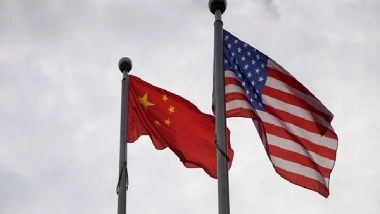
Ottawa [Canada], February 17 (ANI): Finding it a "great opportunity", China is seeking to strengthen its strategic tie-ups in the Middle East in the fields of energy, technology, and infrastructure, as the United States is uprooting itself from the whole middle eastern region after investing heavily in the region.
In January this year alone, senior representatives from Arab countries including Saudi Arabia, Iran and Turkey, have visited China to discuss investments in security technology, infrastructure and energy resources including oil, a Canada-based think tank, International Forum for Rights and Security (IFFRAS) said on Wednesday.
Also Read | US Hopes India Will Support America if Russia Attacks Ukraine.
Saudi Arabia's Faisal bin Farhan Al Saud was the first foreign minister who came come to China, as per IFFRAS.
A meeting between Faisal Al Saud and Wang Yi, Foreign Minister and State Councillor was held in Wuxi, Jiangsu province of East China on January 10 where the two nations expressed their great interest in each other's Marquee schemes such as "Vision 2030" and "Green Middle East" of Saudi Arabia and "Belt and Road Initiative" of China.
Also Read | Afghan Girls Must Definitely Return to School, Says Former President Hamid Karzai.
While other foreign Ministers who visited China last month were Kuwait's Sheikh Ahmad Nasser Al-Mohammad Al-Sabah, Oman's Sayyid BadrAlbusaidi and Bahrain's Dr Abdullatif bin Rashid Al-Zayani, IFFRAS reported adding that analysts believe that these meetings may pave the way for a China-GCC FTA (Free Trade Agreements).
Experts believe that these visits of Foreign Ministers might prove to be a symbiotic relationship where both China and the Middle East can develop mutual cooperation. Apart from physical visits, there have been many virtual meetings as well between the Arab nations and China.
To boost its relationship with the Middle East, China has also contributed greatly in COVID-19 pandemic times. China's pharmaceutical juggernaut, Sinopharm has developed a local COVID vaccine manufacturing plant in the KIZAD zone of UAE, according to IFFRAS.
Meanwhile, there have also been talks among China and Iran to revive the 2015 Iranian Nuclear Deal.
In a report by New York Times, analysts claim that in a larger picture, China's reluctance in engaging in regional politics unlike the US could prove to be deleterious for Sino-Arab relations. (ANI)
(The above story is verified and authored by ANI staff, ANI is South Asia's leading multimedia news agency with over 100 bureaus in India, South Asia and across the globe. ANI brings the latest news on Politics and Current Affairs in India & around the World, Sports, Health, Fitness, Entertainment, & News. The views appearing in the above post do not reflect the opinions of LatestLY)
 Share Now
 Google Trends



 Live Bot