What Will Be Cheaper After India-EU Trade Deal?
India and the European Union (EU) have officially concluded negotiations for a landmark Free Trade Agreement (FTA), an ambitious pact described by both sides as the "mother of all deals." Formally announced on Tuesday, January 27, following the Republic Day celebrations, where EU leaders were guests of honour, the agreement aims to eliminate or significantly reduce tariffs on over 90% of goods traded between the two giants.

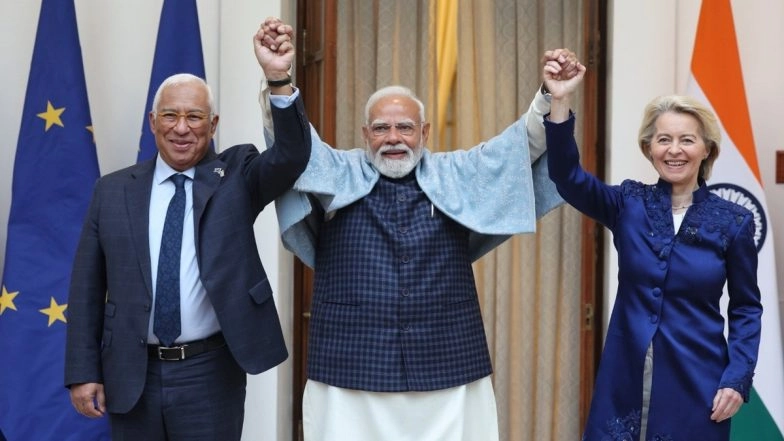
Mumbai, January 27: India and the European Union (EU) have officially concluded negotiations for a landmark Free Trade Agreement (FTA), an ambitious pact described by both sides as the "mother of all deals." Formally announced on Tuesday, January 27, following the Republic Day celebrations, where EU leaders were guests of honour, the agreement aims to eliminate or significantly reduce tariffs on over 90% of goods traded between the two giants. For Indian consumers, this translates into a sharp decline in the prices of high-end imports, ranging from luxury European automobiles to premium spirits and life-saving medicines. India, EU Sign 13 Deals Including Comprehensive Strategic Agenda, FTA, Security and Defence Partnership.
The agreement comes after nearly two decades of sporadic negotiations and is expected to double EU exports to India by 2032. While the deal is slated for formal ratification and is likely to come into effect in early 2027, the roadmap for tariff reductions has already been detailed. By lowering the cost of European technology, machinery, and consumer goods, the pact is designed to foster a more competitive market in India while providing Indian exporters duty-free access to the 27-nation European bloc for textiles, leather, and gems. ‘Milestone in India-EU Strategic Partnership’: PM Narendra Modi, European Union Leadership Antonio Costa and Ursula von der Leyen Hail Historic Free Trade Agreement Deal (Watch Video).
India-EU FTA
India and Europe have taken a major step forward today. The India-EU Free Trade Agreement opens new pathways for growth, investment and strategic cooperation. #IndiaEUTradeDeal @eucopresident https://t.co/eUnDkmL1wO
— Narendra Modi (@narendramodi) January 27, 2026
What Will Be Cheaper After the India-EU FTA
Automobiles: Luxury Cars to See Drastic Cuts
One of the most significant takeaways for the Indian middle and upper class is the reduction in import duties on European vehicles. Currently, many luxury cars imported as Completely Built Units (CBUs) attract duties as high as 110%.
- ICE Vehicles: Tariffs on petrol and diesel cars priced above €15,000 are expected to drop to 40% immediately upon implementation, eventually sliding down to just 10% over the next decade.
- Beneficiary Brands: Iconic manufacturers such as BMW, Mercedes-Benz, Audi, Porsche, and Lamborghini are set to become more accessible to Indian buyers.
- Electric Vehicles (EVs): To protect the domestic "Make in India" EV industry, the current high tariffs on European electric cars will remain unchanged for the first five years before any phased reductions begin.
Lifestyle and Food: Wines, Spirits, and Chocolates
The pact brings a major "reset" for the food and beverage industry, which currently faces some of the highest protective tariffs in India.
- Wines & Spirits: Import duties on European wines, currently at 150%, will be slashed to 20-30%. Duties on spirits like Scotch and Cognac will be reduced to 40%, while beer tariffs will be halved to 50%.
- Gourmet Staples: Tariffs on European olive oil, margarine, and vegetable oils will be eliminated over five years.
- Processed Foods: Popular European exports such as Swiss and Belgian chocolates, Italian pasta, French biscuits, and various cheeses will see their 50% import duties vanish entirely.
Healthcare and Industry: Medicines and Machinery
Beyond luxury goods, the FTA is set to have a profound impact on the cost of healthcare and industrial manufacturing in India.
- Pharmaceuticals: Most European medicines currently face an 11% duty; under the new pact, tariffs on almost all pharmaceutical products will be removed, making advanced European treatments more affordable for Indian patients.
- Medical Equipment: Duties on 90% of optical, medical, and surgical equipment will be eliminated, potentially lowering the costs for hospitals and diagnostic centers.
- Aviation & Machinery: Import duties on aircraft, spacecraft, and industrial machinery, which currently face up to 44% tariffs, will be mostly scrapped, providing a massive boost to India’s infrastructure and aviation sectors.
The timing of the deal is strategically significant, occurring as both India and the EU navigate a global trade landscape marked by protectionism and high reciprocal tariffs from the United States. By locking in this agreement, India secures a stable market for its labor-intensive sectors like textiles and footwear, while the EU gains unprecedented access to one of the world's fastest-growing consumer bases. The deal also includes a 500 million euros commitment from the EU to support India’s green energy transition, underscoring that this partnership extends far beyond simple commerce.
(The above story first appeared on LatestLY on Jan 27, 2026 05:35 PM IST. For more news and updates on politics, world, sports, entertainment and lifestyle, log on to our website latestly.com).