How India Celebrates Sharad Navratri: From Garba in Gujarat to Durga Puja in Bengal, Golu in Tamil Nadu and Bathukamma in Telangana
The festival honours Goddess Durga in her different forms during the nine days of the Navratri festival. While the essence of Navratri remains the same, worshipping the divine feminine energy, the celebrations differ in rituals and cultural expressions across various states, making it a festival that beautifully reflects India’s diversity.

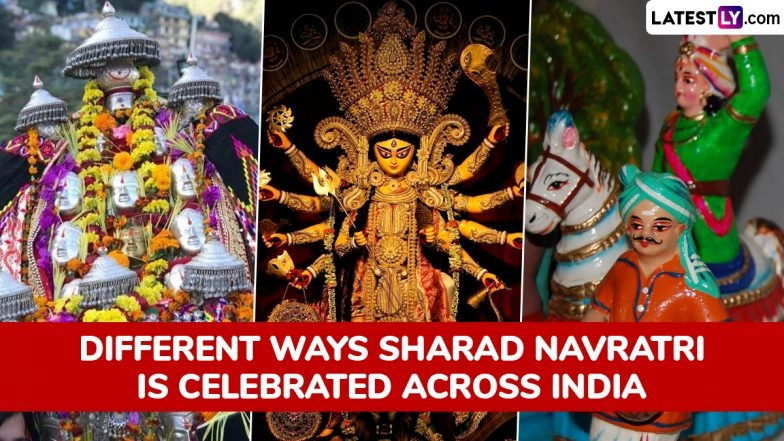
Navratri is one of the most vibrant and widely celebrated festivals in India with great devotion. The nine-day festivity is marked with devotion, music, dance, and cultural traditions across the country. The festival honours Goddess Durga in her different forms during the nine days of the Navratri festival. While the essence of Navratri remains the same, worshipping the divine feminine energy, the celebrations differ in rituals and cultural expressions across various states, making it a festival that beautifully reflects India’s diversity. This year, Sharad Navratri 2025 starts on September 22 with Ghatasthapana and ends on October 2, on the Vijayadashami day. Sharad Navratri 2025 Full Calendar With Dates of Ghatasthapana and Dussehra: Check Schedule of Shardiya Navratri Dedicated to Goddess Durga.
Durga Puja – West Bengal
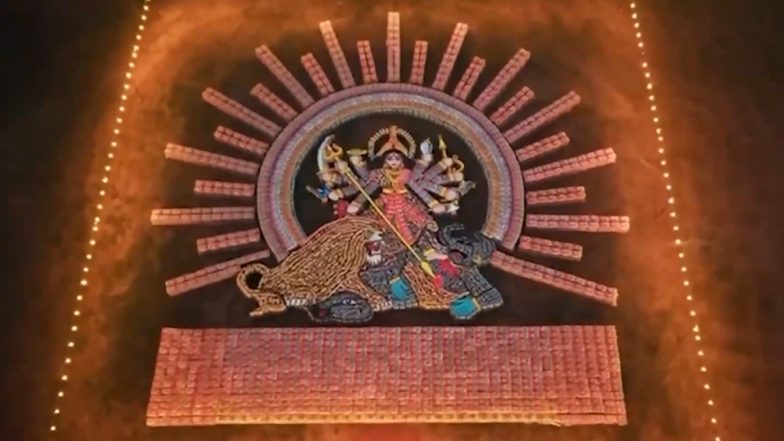
In West Bengal, Navratri coincides with the grand Durga Puja, which is celebrated with immense artistic flair and cultural richness. During this festive time, beautifully crafted pandals and idols of Goddess Durga are set up across cities, especially Kolkata, where the festival becomes a cultural extravaganza. People engage in traditional dances like Dhunuchi Naach, enjoy cultural performances, and participate in elaborate rituals. The five days of Durga Puja, which are from Shashti to Dashami, are celebrated with grand feasting, festive processions, and immersion of idols in rivers. Navratri 2025 Goddess, Colours and Dates: Which Form of Maa Durga To Worship on Each Day? What Color To Wear on These 9 Days? Know All About Sharad Navratri Festival.
Navratri Fasting, Ramlila and Dussehra – North India
In Bihar, Uttar Pradesh, Punjab and other North Indian states, Sharad Navratri is celebrated with deep devotion, with a special focus on Durga Puja. Temporary pandals (marquees) are set up across towns and villages, beautifully decorated with idols of Goddess Durga, attracting large crowds of devotees. The nine days are marked by fasting, prayers, and cultural programmes, with evenings dedicated to aarti and devotional songs. In many households, people read the Durga Saptashati and observe fasts, breaking them with satvik meals. The festival culminates on Vijayadashami (Dussehra) with grand processions where Durga idols are immersed in rivers and ponds, symbolising her return to Mount Kailash. In several places, Ramlila performances and the burning of Ravana’s effigy are also highlights, bringing communities together to celebrate the victory of good over evil.
Garba and Dandiya Raas – Gujarat
In Gujarat, the festival of Navratri is associated with the energetic and colourful Garba and Dandiya Raas. During the 9 days of the Navratri festival, people dress in traditional attire like the chaniya choli for women and kediyu for men, and gather in large grounds to dance in circles around the idol of Goddess Durga. During Sharad Navratri, the state is lit up with live music, dance, and devotion, with Garba nights attracting not only locals but also tourists from all over the world.
Kullu Dussehra – Himachal Pradesh
In Himachal Pradesh, the festival takes a unique form with the famous Kullu Dussehra, which begins when the rest of the country concludes Navratri. Celebrated in the scenic Kullu Valley, the highlight is the grand procession of Lord Raghunath’s idol, accompanied by deities brought from different temples of the region. The week-long fair includes folk music, dance, and cultural performances.
Navratri in Maharashtra
In Maharashtra, Sharad Navratri is marked with nine days of devotion, fasting, and cultural festivities dedicated to Goddess Durga. Homes and temples are decorated, and devotees observe fasting or eat satvik food while performing daily aarti of the Goddess. The festival also has a strong social and cultural connection through Garba and Dandiya nights, especially in Mumbai and Pune, where people come together in colourful attire to dance and celebrate. On the eighth and ninth days, Kanya Puja is performed, honouring young girls as embodiments of the Goddess. The festival culminates with Vijayadashami (Dussehra), when effigies of Ravana are burnt symbolising the victory of good over evil, and people exchange apta leaves (known as “sona”) as a gesture of prosperity and goodwill.
Ayudha Puja and Dasara – Karnataka and Mysuru
In Karnataka, especially in Mysuru, Sharad Navratri is celebrated with grandeur through the world-famous Mysuru Dasara, known as the “Royal Festival.” The highlight is the majestic procession on Vijayadashami, where the idol of Goddess Chamundeshwari is carried on a golden howdah atop an elephant, accompanied by music, dance, tableaux, and cultural performances. Ayudha Puja, observed on the ninth day of Navratri, holds equal significance as people worship tools, vehicles, weapons, and instruments, symbolising respect for one’s livelihood and daily utilities. Together, Ayudha Puja and Mysuru Dasara showcase the state’s blend of devotion, tradition, and royal heritage, making Karnataka a vibrant centre of Sharad Navratri celebrations.
Bathukamma – Telangana
Bathukamma is a vibrant and unique floral festival celebrated predominantly in Telangana, dedicated to Goddess Gauri, a form of Goddess Parvati. It symbolises life, nature, and the inherent strength and beauty of womanhood. Celebrated over nine days during the harvest season, Bathukamma involves women creating intricate, cone-shaped floral arrangements using seasonal flowers native to the region.
Saraswati Puja and Vidyarambham – Kerala
Kerala observes Saraswati Puja and Vidyarambham during Navratri, where students and families worship goddess Saraswati by placing books and instruments before her idol, symbolising the start of learning. The state also decorates multiple Durga temples on the final day, blending spirituality and education.
Golu (Bommai Kolu) – Tamil Nadu
In Tamil Nadu, Navratri is marked by Golu, an artistic display of dolls and figurines depicting mythological stories. People worship goddess Saraswati, Lakshmi, and Durga separately on different days, and conduct Ayudha Puja by worshipping tools, books, and instruments. Classical dance performances also enhance the celebrations.
In West Bengal and parts of Eastern India, the festivities of Navratri are celebrated as Durga Puja. In northern India, Ram Leela performances are enacted in various regions, culminating in Dussehra. Other regions also add their own touch to the Navratri festivities, like the Garhwal and Kumaon regions of Uttarakhand, which hold Ramleela performances, while Tamil Nadu observes Navratri with the traditional ‘Golu’ display of dolls. Together, these diverse celebrations showcase India’s cultural richness and deep-rooted spiritual traditions.
Overall, while the core essence of worshipping Maa Durga for her victory over evil remains the same, the celebration styles vary significantly by region, involving dance, music, elaborate idol displays, fasting, and cultural rituals, reflecting the rich diversity of India's cultural tapestry.
(Disclaimer: The information provided here is based on beliefs and legends only. Before applying any information in real life, consult the concerned expert.)
(The above story first appeared on LatestLY on Sep 15, 2025 02:27 PM IST. For more news and updates on politics, world, sports, entertainment and lifestyle, log on to our website latestly.com).