Ayatollah Khomenei India Connection: First Iran Supreme Leader Traces His Roots to Uttar Pradesh
According to historical records and a report by The Daily Guardian, Ayatollah Ali Khamenei's predecessor Ruhollah Musavi Khomeini’s grandfather, Syed Ahmad Musavi Hindi, was born in Kintoor village in Barabanki district, near Lucknow.

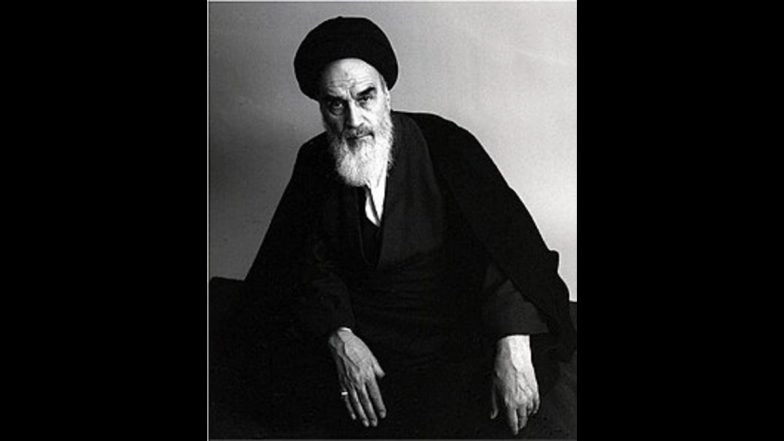
Mumbai, June 18: Amid renewed tensions between Iran and Israel, global attention has once again turned to two key leaders, Israel Prime Minister Benjamin Netanyahu and Iran Supreme Leader Ayatollah Ali Khamenei. However, few are aware that Ayatollah Ruhollah Musavi Khomenei, who spearheaded the Islamic Revolution in Iran and went on to become its first Supreme Leader in 1979, has ancestral ties to India, specifically to Uttar Pradesh.
Fresh concerns have come up after US President Donald Trump said that, "for now" he would not act to eliminate Iran's Supreme Leader Ali Khamenei, and the US could assassinate him, but is refraining to do so. The only reason they are choosing to not do it is to avoid any retaliation against American civilians and troops. He also demanded for an "Unconditional surrender". ‘Battle Has Begun’, Declares Iranian Supreme Leader Ayatollah Ali Khamenei After Iran Fires Hypersonic Missile at Israel Amid Donald Trump’s ‘Unconditional Surrender’.
Ayatollah Ali Khamenei India Connection:
According to historical records and a report by The Daily Guardian, Ayatollah Ali Khamenei's predecessor Ruhollah Musavi Khomeini’s grandfather, Syed Ahmad Musavi Hindi, was born in Kintoor village in Barabanki district, near Lucknow. A respected Shia scholar, Ahmad Musavi migrated from India in the early 1800s to pursue religious studies in the holy cities of Najaf and Karbala in Iraq. Eventually, he settled in the Iranian town of Khomeyn, where his descendants, including Ruhollah Khomeini, would rise to political and spiritual prominence.
Ahmad retained the surname “Hindi”, meaning “from India”, as a marker of his origins, a fact acknowledged by BBC journalist Baqer Moin. His decision to move from British-ruled India was rooted in a desire to deepen his Islamic faith and contribute to its revival during a time of religious and political upheaval. ‘Complete Control Over Iran Skies’: Donald Trump Claims US Has Taken Over Iranian Airspace Amid Conflict With Israel.
In Khomeyn, Ahmad married thrice and had five children, including Mostafa Musavi, the father of Ruhollah Khomeini. Although Ahmad died in 1869, long before his grandson’s birth in 1902, his religious convictions significantly influenced Khomeini, who went on to lead the revolution that overthrew the Shah and established the Islamic Republic of Iran.
Ayatollah Ali Khamenei, Khomeini’s political successor, has served as Iran’s Supreme Leader since 1989. Initially underestimated, Khamenei has consolidated power over four decades, becoming Iran’s undisputed authority. A Reuters report notes that his leadership has shaped Iran’s confrontational stance toward the US and Israel while asserting regional influence and suppressing internal dissent.
(The above story first appeared on LatestLY on Jun 18, 2025 04:16 PM IST. For more news and updates on politics, world, sports, entertainment and lifestyle, log on to our website latestly.com).