Donald Trump Says More US Attacks on Venezuela ‘Will Not Be Needed,’ Cancels Second Wave After Caracas Releases Prisoners, Cites Cooperation
President Donald Trump announced Friday that he has canceled a planned "second wave" of military strikes against Venezuela, citing the release of political prisoners by the interim government in Caracas as a significant step toward regional stability.

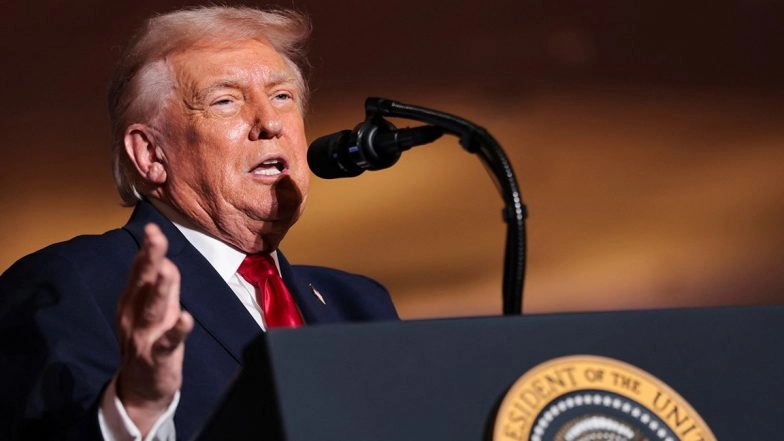
Washington, January 9: President Donald Trump announced Friday that he has canceled a planned "second wave" of military strikes against Venezuela, citing the release of political prisoners by the interim government in Caracas as a significant step toward regional stability. The announcement comes less than a week after a high-stakes U.S. military operation resulted in the capture of longtime leader Nicolás Maduro. In a statement released on social media, the President characterized the prisoner release as a sign that Venezuela is "seeking peace" and indicated that the two nations have entered a period of intense economic cooperation centered on the revitalization of the South American nation’s energy sector.
De-escalation and Continued Maritime Presence
The President’s decision to call off further kinetic action follows his earlier warnings that a larger military phase was prepared. While the "second wave" is now off the table, the administration confirmed that U.S. naval assets will remain in the region for the foreseeable future. "All ships will stay in place for safety and security purposes," the President stated, signaling that while active strikes have paused, the U.S. intends to maintain a "maximum leverage" posture during the transition. ‘I Don’t Need International Law’: US President Donald Trump Says Power Constrained Only by ‘My Own Morality’.
A USD 100 Billion Rebuilding Effort
Central to the new diplomatic thaw is a massive proposed investment in Venezuela’s oil and gas infrastructure, which has suffered from years of underinvestment and sanctions. President Trump claimed that "Big Oil" companies have pledged at least $100 billion to modernize the country’s facilities. White House officials confirmed the President is meeting with top executives from the energy industry today to finalize these plans. The administration’s stated goal is to restore Venezuela’s production capacity to reduce global energy costs, with some officials suggesting a target price of $50 per barrel to benefit American consumers.
The Release of Political Prisoners
The shift in tone follows a "unilateral gesture" from the interim Venezuelan government, led by Acting President Delcy Rodríguez. On Thursday, authorities began freeing high-profile detainees from the El Helicoide prison and other facilities.
-
Who was released: The group includes journalists, lawyers, and human rights activists, as well as several foreign nationals.
-
International impact: Spain’s Foreign Ministry confirmed the release of five Spanish citizens, including prominent activist Rocío San Miguel.
-
Remaining detainees: While human rights groups like Foro Penal welcomed the move, they noted that hundreds of political prisoners remain in custody, urging the administration to ensure these releases are not merely "symbolic."
Background: A Rapidly Shifting Landscape
The current situation follows the January 3 launch of "Operation Absolute Resolve," in which U.S. forces apprehended Nicolás Maduro in Caracas. Maduro is currently in New York facing federal narcotics and terrorism charges. While the U.S. has recognized Delcy Rodríguez’s interim authority, the administration has been transparent about its intent to oversee the "rebuilding" of the state’s primary asset—its oil reserves, which are the largest in the world. US Strikes Venezuela: Interior Minister Says at Least 100 Killed in Military Operation That Led to Capture of Nicolas Maduro.
'US Attacks on Venezuela Will Not Be Needed'
Critics and analysts have raised questions regarding the timeline of the $100 billion investment, noting that the country’s "degraded infrastructure" could take years, rather than months, to fully recover. However, the White House remains optimistic that fresh equipment and the lifting of specific sanctions will accelerate the process.
(The above story first appeared on LatestLY on Jan 09, 2026 07:20 PM IST. For more news and updates on politics, world, sports, entertainment and lifestyle, log on to our website latestly.com).