8th Pay Commission Update: How the Aykroyd Formula Could Spark a 66% Salary Hike
Employee unions are pushing for the 8th Pay Commission to update the Aykroyd Formula by increasing the family unit size from three to five. This shift, along with a higher fitment factor, could lead to a 66 per cent hike in minimum basic pay, raising it from INR 18,000 to INR 30,000 for central government employees and pensioners.

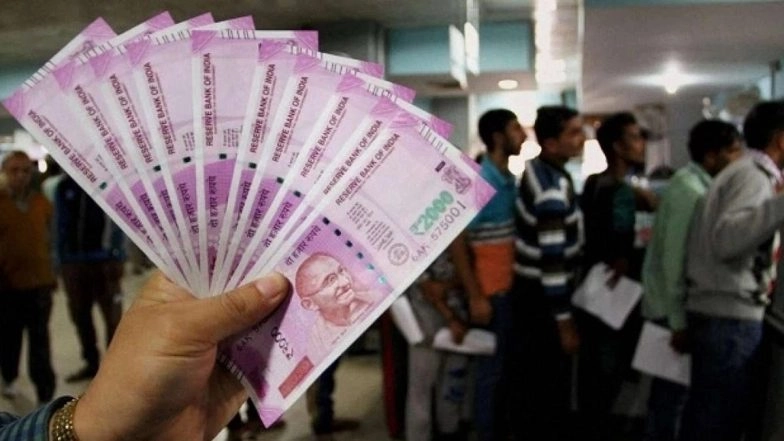
Mumbai, March 1: As expectations build for the constitution of the 8th Central Pay Commission (8th CPC), a significant debate has emerged regarding the methodology used to calculate the basic salary of central government employees. Employee unions are increasingly pushing for a shift in the traditional "Aykroyd Formula", a move that could potentially see the minimum basic pay rise by approximately 66 per cent. If the government accepts these revised parameters, the current minimum salary of INR 18,000 could jump to approximately INR 30,000 per month.
The Role of the Aykroyd Formula in 8th Pay Commission Salary
The Aykroyd Formula has been the cornerstone for salary revisions for decades, basing the minimum wage on the cost of essential commodities such as food, clothing, and fuel. However, the current debate centers on the "standard family size" used in these calculations. Under previous commissions, the formula accounted for a family of three (two adults and one child). Employee unions are now demanding that the 8th Pay Commission recognize a family size of five. 8th Pay Commission: Central Government Employees Seek 3.25 Fitment Factor, Higher Leave Encashment and 7% Annual Increment.
They argue that as life expectancy increases and social structures evolve, employees are often supporting aged parents in addition to children, making the current three-unit calculation obsolete and financially insufficient. Under the 7th Pay Commission, minimum pay was based on three consumption units which covered the employee, spouse and two children. Notably, this calculation was based on Dr Wallace Aykroyd's formula which determined living wages based on nutritional requirement (2,700 calories per adult), clothing requirement (72 yards per year) and housing cost.
Proposed Minimum Pay Increase
The shift in family units is the primary driver behind the demand for a massive hike. Beyond the family size adjustment, unions are also seeking a higher "Fitment Factor". While the 7th Pay Commission used a fitment factor of 2.57, there are calls to increase this to 3. 25 to 3.68 for the next cycle.
If these adjustments are integrated, the resulting 66 per cent hike would bridge the gap between current inflation rates and the purchasing power of government staff. This proposal aims to ensure that the lowest-paid employees can maintain a standard of living that accounts for modern healthcare and educational costs.
Economic Impact and Government Stance
The implementation of the 8th Pay Commission is expected to impact over 4.8 million central government employees and 6.7 million pensioners. Historically, such revisions result in a significant surge in the government's fiscal expenditure. While the government has not yet made a formal announcement regarding the date of the commission's formation, it typically takes place every ten years.
With the 7th Pay Commission recommendations implemented in 2016, the next transition is widely expected to occur by January 1, 2026. Experts suggest the government may weigh the union demands against the current fiscal deficit and inflationary pressures before finalizing the terms of reference. 8th Pay Commission Effective Date: Will Salaries and Pensions Be Revised From January 1, 2026?
Historical Context
The 7th Pay Commission had previously acknowledged the limitations of the Aykroyd Formula but ultimately chose to stick with the established three-unit family model. The renewed momentum behind the "five-unit" demand highlights a growing consensus among staff associations that the cost of living has outpaced the traditional metrics established in the mid-20th century.
(The above story first appeared on LatestLY on Mar 02, 2026 12:04 PM IST. For more news and updates on politics, world, sports, entertainment and lifestyle, log on to our website latestly.com).