Chandra Grahan 2026: Date, Time and Will the Total Lunar Eclipse Blood Moon Be Visible From India?
On March 3, India will witness a total lunar eclipse coinciding with the Holi festival. Known as a Blood Moon, the eclipse peaks between 6:33 PM and 6:40 PM IST. Visibility varies by region; eastern cities like Kolkata will see nearly 90 per cent, while Mumbai and Delhi will catch the final reddish phase during moonrise.

- Read in
- हिंदी
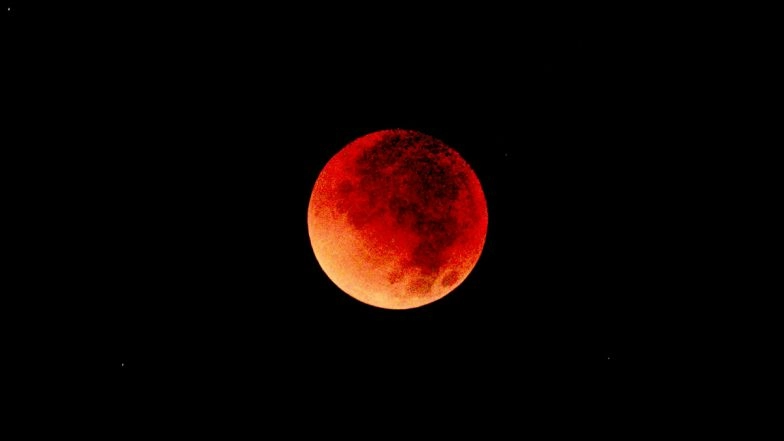
Mumbai, March 2: Stargazers and devotees across India are preparing for a rare celestial double-header as the first lunar eclipse (Chandra Grahan) of 2026 is set to occur on Tuesday, March 3. The astronomical event, often referred to as a "Blood Moon", holds particular significance this year as it coincides with the Hindu festival of Holi, marking a unique intersection of science and tradition.
The total lunar eclipse will be visible across various parts of the globe, including the Americas, Australia, and the Asia-Pacific region. In India, the timing of the moonrise will dictate how much of the spectacle viewers can witness. So, will the total lunar eclipse blood boon be visible in India? Scroll below to know more. Holi Grahan 2026: Did You Know It is a Rare Hat-trick of Holi and Lunar Eclipse This Year?
Total Lunar Eclipse Timings and Visibility in India
According to astronomical data, the eclipse will begin in the afternoon of March 3 at approximately 3:20 PM India Standard Time (IST). However, since the moon will still be below the horizon for much of India during the early phases, most residents will only see the concluding stages of the event.
-
Peak Visibility: The total phase, where the moon is fully engulfed in the Earth's shadow, is expected between 6:33 PM and 6:40 PM IST.
-
Regional Differences: Cities in Northeast India, such as Guwahati and Kolkata, will have the best view as the moon rises earlier there. In Kolkata, viewers may see up to 90 per cent of the lunar eclipse.
-
Major Metros: In Delhi, Mumbai, and Bengaluru, the moon will rise between 6:20 PM and 6:30 PM IST, allowing residents to catch the final "Blood Moon" tint just before the eclipse ends at 6:47 PM IST.
The Science of the Total Lunar Eclipse 'Blood Moon'
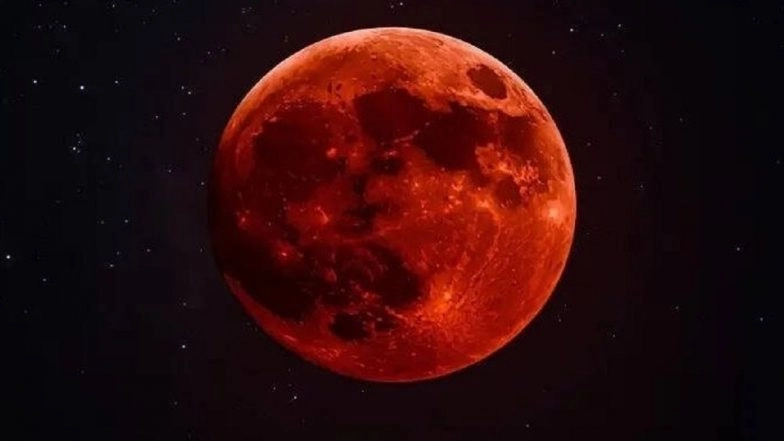
A total lunar eclipse occurs when the Earth positions itself directly between the sun and the moon, casting its deep shadow, or umbra, across the lunar surface. Despite being in shadow, the moon often takes on a striking reddish or coppery hue. This phenomenon is caused by "Rayleigh scattering", where the Earth's atmosphere filters out blue light but bends longer red wavelengths toward the moon - the same effect that causes red sunrises and sunsets.
Cultural and Ritual Significance of Lunar Eclipse (Chandra Grahan)
The coincidence of the Chandra Grahan (Lunar Eclipse) with Holi has sparked widespread discussion among scholars and astrologers regarding ritual timings. Traditionally, the period preceding an eclipse, known as Sutak Kaal, is considered inauspicious for certain religious activities. Because the eclipse falls on Phalguna Purnima (the full moon day of Holi), many communities are adjusting the timings for Holika Dahan - the ceremonial bonfire held the night before the main festival - to ensure rituals are completed before the eclipse's spiritual influence begins. Stock Market Holidays March 2026: Will NSE and BSE Remain Closed on Holi? Check Trading Holiday List.
Viewing Tips for Lunar Chandra Grahan Enthusiasts
Unlike a solar eclipse, a lunar eclipse is perfectly safe to view with the naked eye and requires no special filters. For the best experience, experts recommend finding a location with an unobstructed view of the eastern horizon. While the reddish tint will be visible to the unaided eye, using binoculars or a small telescope can help observers see the crater details as the shadow recedes. For those in areas with heavy cloud cover or city smog, several scientific organizations are expected to provide live digital streams of the event.
(The above story first appeared on LatestLY on Mar 02, 2026 08:52 AM IST. For more news and updates on politics, world, sports, entertainment and lifestyle, log on to our website latestly.com).