Why is Greenland in the News?
Is Greenland an Island or a Country? The answer to the question is both. Greenland is not a colony, but it is not fully independent either. Physically, Greenland is the world's largest island (that is not a continent). Politically, it is an autonomous constituent country within the Kingdom of Denmark.

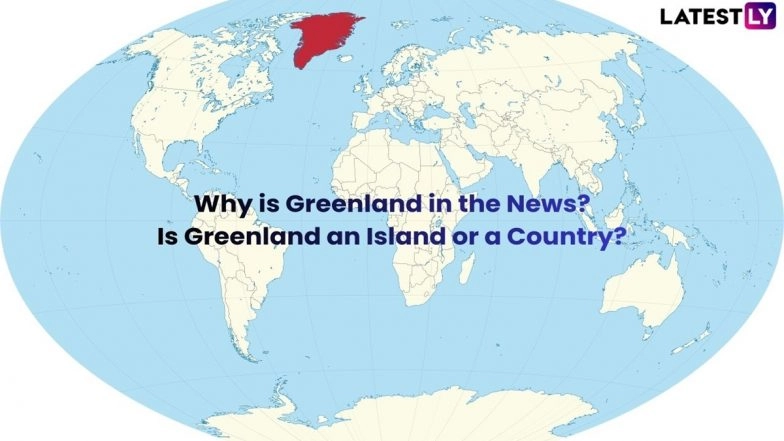
Greenland is a place of extremes. It is the largest island on Earth, yet has one of the smallest populations. It is geographically part of North America—sitting just 16 miles from Canada at its closest point—but politically and culturally tied to Europe. It is called "Greenland," yet 80% of its surface is buried under a permanent sheet of ice.
Greenland's Geography: The Great White North
If you were to flatten out Greenland, it would cover an area roughly three times the size of Texas or slightly larger than Saudi Arabia. However, the vast majority of this land is uninhabitable.
The defining feature of the country is the Greenland Ice Sheet. It covers 1.7 million square kilometres and is up to 3 kilometres (1.9 miles) thick. If this entire ice sheet were to melt, global sea levels would rise by approximately 7 meters (23 feet).
The human population lives on the rocky, coastal fringe, the "green" ring around the white centre. This area is filled with deep fjords, towering granite peaks, and glaciers that calve massive icebergs into the sea.
Political Status: Is Greenland an Island or a Country?
The answer to the above question is both. Greenland is not a colony, but it is not fully independent either. Physically, Greenland is the world's largest island (that is not a continent). Politically, it is an autonomous constituent country within the Kingdom of Denmark. It is not a sovereign state but it functions like an independent nation in most domestic matters.
The Danish Realm: Greenland is part of the "Kingdom of Denmark," which also includes Denmark proper and the Faroe Islands.
Self-Rule: Since 2009, Greenland has had "Self-Government." The Greenlandic government (Naalakkersuisut) controls the police, courts, coast guard, and natural resources.
The Danish Role: Denmark is still responsible for foreign policy, defence, and the currency (the Danish Krone). Denmark also provides a "block grant" (subsidy) that accounts for a significant portion of Greenland's government revenue.
History of Greenland: Vikings and Inuit
The human history of Greenland is a story of waves of migration.
The Inuit: The modern population is primarily Inuit (specifically Thule people), who arrived from North America around the 13th century. They brought the dog sledge and the kayak (qajaq), technologies perfectly adapted to the harsh environment.
The Norse: Around 985 AD, Viking explorer Erik the Red arrived from Iceland. He founded two main settlements that lasted for nearly 500 years before mysteriously disappearing in the 15th century.
Re-colonisation: In 1721, the Danish-Norwegian priest Hans Egede arrived, hoping to find the lost Vikings. He found the Inuit instead and established Nuuk (then Godthåb), beginning the modern colonial era.
Modern Life in Greenland and Infrastructure
Living in Greenland presents unique logistical challenges.
No Roads: There are no roads connecting towns. You cannot drive from one city to another. To travel from the capital, Nuuk, to the second-largest city, Sisimiut, you must fly or take a coastal ferry.
The Capital: Nuuk is one of the world’s smallest capitals (pop. ~19,000), but it is a modern city with a university, shopping centers, gourmet restaurants, and traffic lights.
Economy: The economy is heavily dependent on fishing (90% of exports), particularly shrimp and Greenland halibut.
FAQ: Frequently Asked Questions & Trivia About Greenland
Q: Why is it called Greenland if it’s mostly ice?
A: It was a marketing stunt. Erik the Red, a Viking exiled from Iceland for manslaughter, wanted to attract settlers to his new discovery. He famously said that "people would be more attracted thither if the land had a favorable name." It worked; thousands of Vikings eventually moved there. Ironically, Iceland (which is quite green) was named by a Viking who saw some drift ice and gave it a discouraging name.
Q: Can I buy land in Greenland?
A: No. Nobody owns land in Greenland. All land is owned by the collective (the government/municipality). You cannot buy a plot of land to build a house; you can only obtain the right to use the land. If you sell your house, you are selling the building, not the ground it sits on.
Q: Is Greenland for sale?
A: No. This question trended globally in 2019 when U.S. President Donald Trump expressed interest in buying Greenland from Denmark. The Greenlandic government responded: "We are open for business, not for sale."
Q: What language do they speak in Greenland?
A: The official language is Greenlandic (Kalaallisut). It is an Inuit language related to those spoken in Canada and Alaska. Danish is also widely spoken and taught in schools, and English is becoming common among the youth.
Q: Does the sun really not set in Greenland?
A: Yes. Because Greenland is largely above the Arctic Circle, it experiences the Midnight Sun in summer (the sun never sets for weeks or months) and Polar Night in winter (the sun never rises).
Q: Are there polar bears in the Greenland towns?
A: Generally, no. Polar bears live mostly in North and East Greenland on the sea ice. They are rarely seen in the populated towns of the West Coast like Nuuk, though sightings do happen occasionally as climate change pushes bears closer to human settlements in search of food.
Q: How big is the population of Greenland?
A: The population is roughly 56,000 people. To put that in perspective, the entire population of Greenland could fit inside a single large football stadium.
Why is Greenland in the News? Current Geopolitical State of Greenland
As of early 2026, Greenland finds itself in a fragile geopolitical position, balancing its push for independence against rising pressure from global superpowers.
Internal Politics: The political landscape in Nuuk shifted significantly following the 2025 general elections. A new coalition government, led by Prime Minister Jens-Frederik Nielsen, has taken power. While the population remains overwhelmingly in favour of eventual independence from Denmark (polls show over 80% support), the new administration acts with caution. They recognise that severing ties with Denmark too quickly could leave the island economically vulnerable and defenceless against unwanted advances from the U.S., China, or Russia.
The Independence Draft: Work on a formal Greenlandic constitution is ongoing. The draft constitution is seen as the final roadmap to sovereignty, but the timeline remains undefined due to the economic reality: Greenland still relies on the annual block grant from Denmark (approx. $600 million USD) to fund its public services.
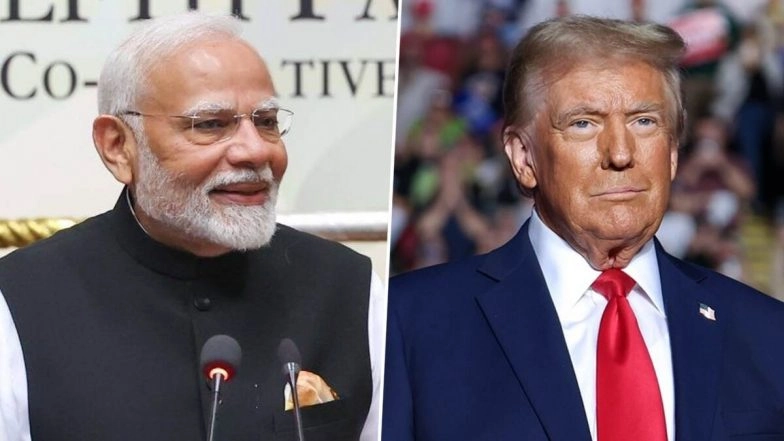
The "Purchase" Controversy & Donald Trump's 2026 Ultimatum: The question of U.S. ownership of Greenland, which sparked a diplomatic row in 2019, has resurfaced with intensity following Donald Trump's return to the presidency.
The 2019 Context: In his first term, President Trump famously cancelled a state visit to Denmark after Prime Minister Mette Frederiksen described his interest in buying Greenland as "absurd." Trump viewed the island as a key strategic asset, similar to the 19th-century purchase of Alaska, due to its location in the Arctic and its vast untapped rare-earth mineral deposits.
The 2026 Escalation: Since taking office again, President Trump has moved beyond the idea of a simple real estate transaction. Just days ago, on January 10, 2026, he issued his most direct statement yet regarding U.S. intentions for the island, citing threats from rival powers:
"We are going to do something on Greenland whether they like it or not. Because if we don't do it, Russia or China will take over Greenland, and we're not going to have Russia or China as a neighbor... I would like to make a deal the easy way, but if we don't do it the easy way, we're going to do it the hard way." - Donald Trump
Donald Trump: 'We are going to do something on Greenland whether they like it or not'
This statement has drawn sharp rebukes from both Nuuk and Copenhagen. Greenlandic officials have reiterated their stance: "We are open for business, but we are not for sale." The U.S. already maintains a significant military presence at the Pituffik Space Base (formerly Thule Air Base) in northern Greenland, but full acquisition remains legally impossible under the current Danish constitution. ‘Two Dog Sleds’: Donald Trump Mocks Greenland’s Defenses, Says US Should ‘Acquire’ Greenland.
Greenland Today: A Crossroads in the Ice
Greenland is no longer just a quiet, icy frontier at the top of the world; it has become the centre of a new "Arctic Great Game." While its people hunt, fish, and navigate the challenges of a melting landscape, their homeland is being eyed by the world's most powerful nations. The island stands at a historic crossroads: it is an indigenous nation striving for modern independence, a European territory by law, and a North American fortress by geography. Whether Greenland can chart its own course without being swallowed by the geopolitical ambitions of others will be the defining story of the Arctic for the coming decade.
(The above story first appeared on LatestLY on Jan 12, 2026 11:39 PM IST. For more news and updates on politics, world, sports, entertainment and lifestyle, log on to our website latestly.com).