Do Heat Pumps Work in Cold Weather?
Worldwide, people are increasingly turning to heat pumps to warm their home.

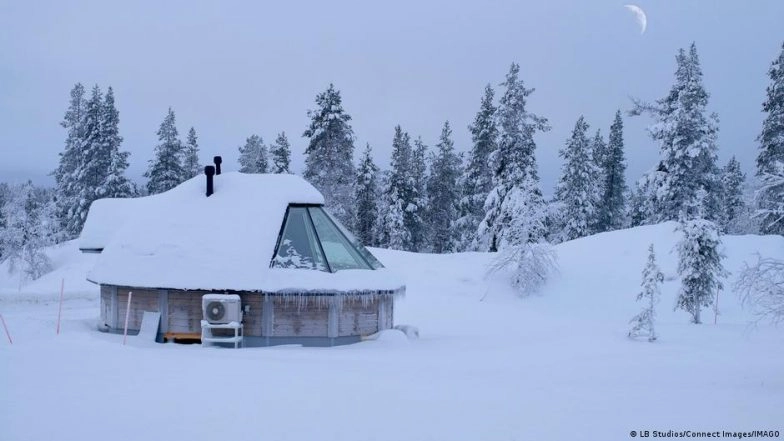
Worldwide, people are increasingly turning to heat pumps to warm their home. They save money, and they're good for the environment. In Northern Europe, they've long proved their worth in colder climates.Germany's ruling coalition plans to slow parts of its renewable push and amend a key heating law, amid fossil-fuel industry lobbying and public hesitation over alternatives like heat pumps.
Also Read | India News | Assam CM Offers Prayers at Batadrava Than on First Day of Falgu Utsav, Extends Holi Greetings.
Though new buildings frequently feature heat pumps, many Germans remain skeptical of the technology as an alternative to standard heating systems that rely on polluting fuels like gas, oil or coal.
Also Read | Entertainment News | Adnan Sami Sparks Nostalgia with Throwback Holi Pictures with Amitabh Bachchan.
And yet, they've long been the standard in countries like Norway and Finland, where winter temperatures often drop below minus 20 degrees Celsius (minus 4 Fahrenheit) for weeks.
How effective are heat pumps in extreme cold?
Subzero temperatures don't pose a problem for heat pumps. The refrigerants used in the heat exchanger, which transfers heat from outside a building to inside, have an extremely low boiling point — below minus 40 C. That means even when it's very cold, a heat pump can absorb ambient heat from the outside air and use it to warm a building.
Air-source heat pumps in use across Scandinavia or in the Arctic work well at temperatures as low as minus 25 C. When it's colder, they can be supplemented by an electric heating element to give the system an extra boost.
Ground-source heat pumps, which extract heat from the soil or groundwater, are even more efficient. Compared with the air temperature, which fluctuates throughout the year, the temperature of soil and groundwater is generally higher and remains relatively stable. These systems tap heat from as deep as 300 meters (about 1,000 feet) underground, where temperatures stay around 10 C — even if it's minus 50 C at the surface.
Heat pumps slightly less efficient in winter but better than gas
Heat pumps draw on ambient warmth, making them highly efficient because most of the energy they deliver is already present in the environment and is not generated by burning fossil fuels.
In Scandinavia, heat pumps get about two-thirds of their energy from the surrounding environment, with the rest coming from the compressor's motor. On a yearly average, a heat pump delivers roughly 3 kilowatt hours (kWh) of warmth for every 1 kWh of electricity it uses — an efficiency of 300%. By comparison, a standard gas heating system is typically less than 100% efficient, and older models often fall below 80%.
At an outside temperature of 12 C, a modern heat pump can transfer up to 10 kWh of warmth with 1 kWh of electricity — a performance ratio of 10. Low temperatures decrease this performance ratio, as the system's compressor is forced to work harder to transfer heat from the colder air.
According to a 2023 study in sustainable energy research journal Joule, modern heat pumps operating in temperatures of minus 20 C during the Finnish winter were able to move 2 kWh of heat using 1 kWh of electricity — a 200% operating efficiency. At minus 30, it was between 1 and 2 kWh of heat.
Recent trials in Alaska have shown similar results. A heat pump specifically tailored for cold climates like the northernmost US state was able to transfer 2 kWh of heat with 1 kWh at minus 25 C, and 1.8 kWh at minus 35.
Heat pumps standard in Scandinavia
Winter temperatures in Norway, Sweden and Finland are often below freezing. In the far north, it can stay under minus 20 C for weeks. Despite the frigid climate, heat pumps have become the most important heating systems in the region.
In Norway, 66% of households now use the technology to keep their homes cozy in the winter. In Finland, it's 55%, while just over half of Swedish homes use heat pumps. When it comes to new buildings, more than 90% of installed heating systems in all three countries are heat pumps.
Many cities using district heating are increasingly turning to huge heat pumps that can service thousands of homes, in a move away from polluting fuels.
In Helsinki, the world's largest air-source heat pump is expected to begin operation by the end of 2026, bringing heat to 30,000 homes. It will transfer up to 33,000 kilowatts of heat and operate efficiently at temperatures as low as minus 20 C, eliminating the release of 26,000 tons of planet-warming carbon dioxide.
Good advice key to finding right heat pump
Heat pumps and air conditioning units can be used to heat and cool practically any building. The same technology, used in refrigerators to keep food from spoiling, is tried and tested.
In many countries, households using heat pumps are able to save money on their heating bills. In Germany's comparatively mild climate — which resembles that of the Pacific Northwest or New England in the US — homes that use the technology already save at least 30% on their bills. In Sweden, the savings are over 50%. Neighboring Norway has already banned the use of heating oil since 2020, in an effort to reduce its greenhouse gas emissions.
Before installing a heat pump, however, it's worth taking the time to speak with an expert. Better-insulated homes are more efficient when it comes to heating, and energy experts can help determine the best heating installation for your location.
When it comes to price, air-source heat pumps are often more inexpensive than models that source their heat from the ground. That's because more are on the market, making them cheaper to produce. They also don't require costly drilling to install.
This article was originally written in German.
(The above story first appeared on LatestLY on Mar 03, 2026 06:10 PM IST. For more news and updates on politics, world, sports, entertainment and lifestyle, log on to our website latestly.com).