











 Quickly
 Socially
 Trending
 Crypto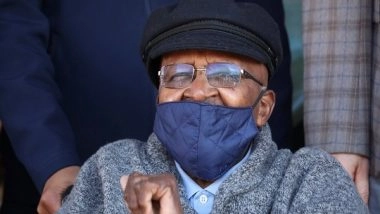
Cape Town [South Africa], January 1(ANI): South African anti-apartheid hero Archbishop Desmond Tutu was laid to rest on Saturday in Cape Town's St. George's Cathedral.
Tutu's funeral was limited to just 100 people, in line with current South African government Covid-19 regulations, CNN reported.
Also Read | Australia To Rename Aspen Island To Honor Queen Elizabeth II on Platinum Jubilee, Says PM Scott Morrison.
South Africa has been marking a week of mourning following Tutu's death on December 26. He was aged 90.
South African President Cyril Ramaphosa delivered the main eulogy during the service at St. George's Cathedral. Tutu's body will be cremated in a private ceremony after Saturday's requiem mass and will then be interred behind the pulpit at the cathedral, CNN reported.
Also Read | Omicron Less Severe as it Mostly Avoids Attacking Lungs, Says Report.
For decades, Tutu was one of the primary voices pushing the South African government to end apartheid, the country's official policy of racial segregation. He won a Nobel Peace Prize in 1984, before apartheid ended in the early 1990s and the long-imprisoned Nelson Mandela became South Africa's first Black president.
The revered anti-apartheid fighter will be remembered as one of the most important voices of the 20th century. However, his funeral was set to be subdued: Before he died, Tutu asked for a simple service and the cheapest available coffin, according to two of his foundations.
Tutu passed away on Sunday at the age of 90, in Cape Town. South African President Cyril Ramaphosa said that the activist's death "is another chapter of bereavement in our nation's farewell to a generation of outstanding South Africans."
Events were planned throughout the country to give South Africans the opportunity to collectively mourn "the Arch," as he was known, while still practising social distancing.
A week-long remembrance began Monday with the ringing of the bells at St. George's Cathedral, a church famous for its role in the resistance against apartheid rule. St. George's held a special place in the late archbishop's heart, so much so that he requested his ashes be interred there in a special repository.
Tutu is widely known for his staunch opposition to apartheid, which resulted in him receiving a Nobel Prize in 1984, but he has spoken out on many other causes as well. The archbishop also served as the chairman of the Truth and Reconciliation Commission after the abolition of apartheid and is known for coining the term "Rainbow Nation" to describe post-apartheid South Africa. (ANI)
(The above story is verified and authored by ANI staff, ANI is South Asia's leading multimedia news agency with over 100 bureaus in India, South Asia and across the globe. ANI brings the latest news on Politics and Current Affairs in India & around the World, Sports, Health, Fitness, Entertainment, & News. The views appearing in the above post do not reflect the opinions of LatestLY)
 Share Now
 Google Trends



 Live Bot