Google Issues Urgent Security Alert As Arsink Malware Hits Over 45,000 Android Users Worldwide; Know Steps To Protect Your Data
Recently, Google has alerted Android users to Arsink, a dangerous Remote Access Trojan (RAT) infecting over 45,000 devices. Disguised as "modded" apps like WhatsApp or TikTok, it uses Google cloud services to steal SMS (including OTPs) and record audio. To stay safe, enable Play Protect and avoid sideloading apps.

- Read in
- हिंदी
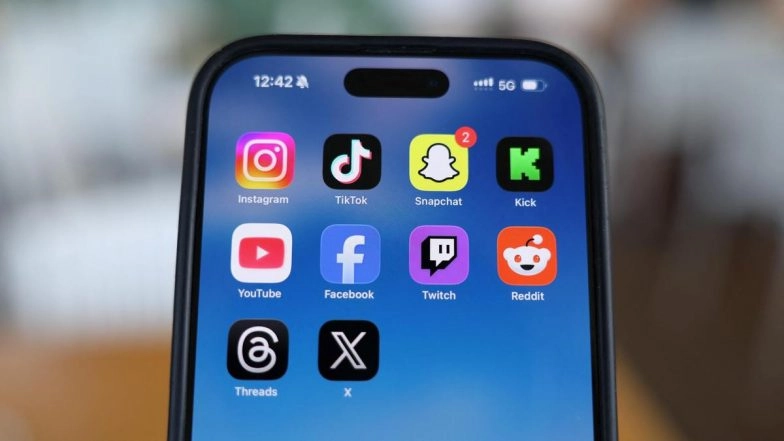
Mumbai, February 8: Google has issued a high-priority security warning for Android users following the discovery of a sophisticated Remote Access Trojan (RAT) dubbed Arsink. Cybersecurity researchers at Zimperium recently uncovered the extensive campaign, which has already compromised over 45,000 devices across 143 countries, including significant clusters in India, Indonesia, and Egypt. Unlike traditional viruses, Arsink exploits legitimate cloud infrastructure to remain undetected while granting attackers near-complete control over infected smartphones.
A Sophisticated Surveillance Threat
The Arsink malware is categorised as a "cloud-native" threat because it abuses trusted services like Google Firebase, Google Drive, and Telegram to exfiltrate stolen data. By using these familiar platforms for its command-and-control (C2) operations, the malware effectively bypasses many traditional security filters that typically flag unknown or suspicious servers. Google Pixel 10a: Google Pixel 9a Price Drops Ahead of February 18 Launch.
Once a device is infected, Arsink can perform an alarming range of intrusive actions:
Data Theft: It harvests SMS messages (including 2FA codes), call logs, contacts, and Google account emails.
Live Surveillance: Attackers can remotely activate the microphone to record conversations and access the camera to steal photos.
Device Control: The RAT allows operators to initiate phone calls, toggle the flashlight, and in extreme cases, remotely wipe the device’s entire external storage.
Distribution Through Social Engineering
The primary delivery method for Arsink is not through the official Google Play Store, but via social engineering. Attackers distribute malicious APK files through Telegram channels, Discord posts, and third-party download links on MediaFire.
The malware often impersonates "premium," "pro," or "modded" versions of over 50 popular brands, including YouTube, WhatsApp, Instagram, and TikTok. Once a user is lured into sideloading these apps, the malware requests extensive permissions, hides its launcher icon, and begins running as a persistent background service to prevent the user from closing it.
Steps to Secure Your Device
Google has confirmed that it is working with security researchers to take down the malicious Firebase endpoints and Google Apps Script instances used by the hackers. To protect your data, experts recommend the following safety measures:
Enable Google Play Protect: Ensure this feature is active in your Play Store settings. It is designed to scan and block known Arsink variants, even those installed from outside the store.
Avoid Sideloading: Do not download "modded" or "pro" APKs from unofficial sources, social media ads, or chat apps.
Audit App Permissions: Regularly check your "Apps" settings for any unfamiliar applications that have access to your microphone, SMS, or contacts.
Update Software: Install the latest February 2026 Android Security Patch. Devices running older versions of Android are considered more vulnerable to the persistence mechanisms used by Arsink. iPhone 18 Pro Max and iPhone 18 Pro Leaks Reveal Under-Display Face ID and A20 Pro Chip; Apple To Introduce Variable Aperture.
Ultimately, the emergence of Arsink serves as a stark reminder of the evolving complexity of mobile threats in 2026. By camouflaging itself within trusted cloud ecosystems and exploiting the common desire for "premium" features through unverified APKs, the malware bypasses traditional defences with ease. To stay ahead of such sophisticated surveillance, users must adopt a proactive security posture: prioritise the official Google Play Store, maintain the latest system updates, and treat high-level permission requests with healthy scepticism. In a digital landscape where your smartphone holds the keys to your financial and personal identity, vigilance remains the most effective firewall.
(The above story first appeared on LatestLY on Feb 08, 2026 09:55 AM IST. For more news and updates on politics, world, sports, entertainment and lifestyle, log on to our website latestly.com).