What Is Ricin? What Makes It So Deadly? All You Need To Know As Gujarat ATS Foils Chemical Terror Plot
The Gujarat ATS foiled a terror plot after arresting three men, including a doctor, accused of trying to make Ricin, one of the deadliest toxins known. Learn what ricin is, how it works, its fatal effects on the body, and why it poses a major biosecurity threat despite its easy availability.

New Delhi, November 12: Earlier this week, the Gujarat Anti-Terrorist Squad (ATS) arrested three men - including a doctor with a “Chinese medical degree” - for allegedly attempting to produce Ricin, a highly toxic chemical compound.
According to officials, the accused had been planning a terror attack and had surveyed multiple locations, including the Rashtriya Swayamsevak Sangh (RSS) office in Lucknow, the Azadpur Agriculture Market in Delhi, and the Naroda fruit market in Ahmedabad. The ease of producing Ricin and the minute quantities needed to kill make it a major concern for law enforcement agencies. Ricin Poison Terror Plot? Gujarat Police Unravel Plot to Poison Water; Arrest Dr Ahmed Mohiuddin Syed, 2 Others.
What Is Ricin?
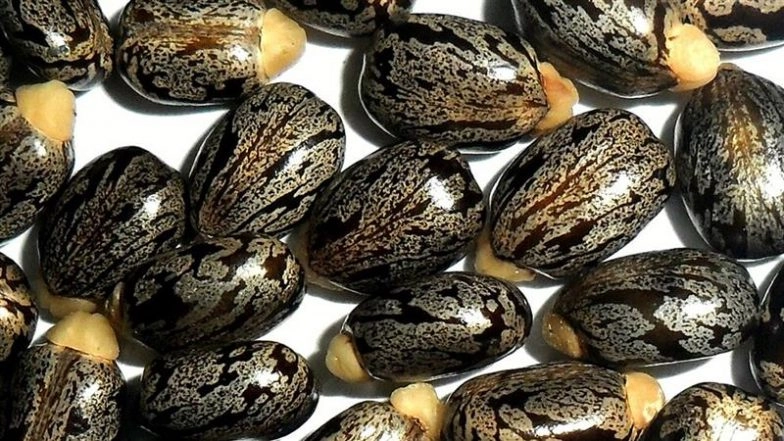
Ricin is a natural poison derived from the castor bean plant, which is commonly used to produce castor oil. Countries such as India, Brazil, and China are major producers of castor beans. The toxin makes up about 1–5% of the leftover residue after oil extraction.
Experts warn that even a single milligram of ricin can be fatal to an adult if ingested. “The plant is widely available, and the poison is not very difficult to extract from the seeds,” said Dr YK Gupta, former head of the National Poison Information Centre at AIIMS, New Delhi. Delhi Blast Probe: NIA Team Likely to Visit Faridabad’s Al-Falah Medical College in Connection With Car Blast.
How Ricin Affects the Body
Once absorbed, ricin binds to ribosomes — the structures in cells that produce proteins — and stops them from functioning. This halts protein synthesis, leading to cell death and multiple organ failure. The severity of the poisoning depends on how the toxin enters the body — ingestion, inhalation, or injection.
Symptoms of Ricin Poisoning
- Ingestion: Severe vomiting, bloody diarrhoea, low blood pressure, seizures, and multi-organ failure.
- Inhalation: Difficulty breathing, chest tightness, and persistent cough.
- Injection: Rapid organ shutdown and possible death.
Even though the seeds of the castor plant are toxic, accidental ingestion (especially by children) is rare. “Usually, nothing happens unless the seed is chewed or broken open,” Dr Gupta added. Castor oil itself is safe as the toxin is removed during processing.
No Known Antidote
There is no specific antidote for ricin poisoning. Treatment is primarily symptomatic, focusing on managing the effects and preventing further absorption. If detected early, doctors may induce vomiting or perform gastric lavage, but once absorbed, the toxin is hard to neutralise.
Past Uses of Ricin as a Weapon
Ricin has long been of military and criminal interest due to its potency and availability.
- It was studied during World War I and World War II as a potential chemical weapon.
- Iraq reportedly attempted to weaponize it in the 1980s.
- It is classified as a Schedule 1 toxin under the Chemical Weapons Convention, alongside sarin and mustard gas.
One of the most infamous uses of ricin was in 1978, when Bulgarian journalist Georgi Markov was assassinated in London using a ricin pellet shot from an umbrella tip.
Authorities worldwide remain alert to the misuse of ricin, especially since the toxin can be extracted using easily available materials. Though not easily absorbed through the skin, it poses a deadly risk when inhaled, injected, or ingested — making it a continuing challenge for counter-terrorism and health agencies.
(The above story first appeared on LatestLY on Nov 12, 2025 05:20 PM IST. For more news and updates on politics, world, sports, entertainment and lifestyle, log on to our website latestly.com).