Samastipur Nag Panchami Mela Viral Videos: Know Cultural and Religious Significance of Bihar’s 300-Year-Old Snake Fair Held at Scindia Ghat
The Nag Panchami Mela at Scindia Ghat is more than just a religious gathering. Bihar's famous snake fair is a testament to the enduring power of local faith, oral traditions, and community bonding. In a rapidly changing world, this 300-year-old fair reminds us of the depth and beauty of India’s grassroots spirituality.

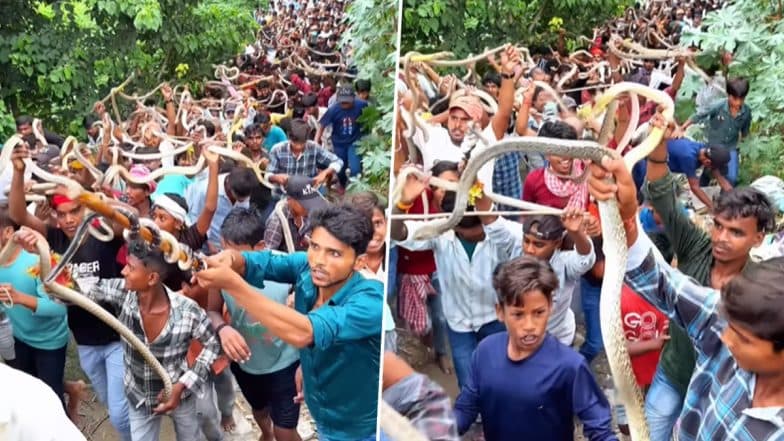
Watching hundreds of men carrying snakes, some wrapping the slithering reptiles around their necks, is not a sight for the faint-hearted. Several videos from Bihar’s famous Samastipur Nag Panchami Mela have emerged and are going viral on social media. Every year, during the holy occasion of Nag Panchami, the town of Samastipur in Bihar comes alive with fervour, colour and faith. The annual Nag Panchami Mela or Snake Fair, held at Scindia Ghat, has become a cherished tradition that’s not only steeped in spirituality but also revered for its cultural richness and folklore. Recently, several viral videos from the Samastipur Mela have captured the imagination of the internet, giving viewers a glimpse into this centuries-old celebration where devotion meets spectacle. When Is Sawan Shivratri 2025? Here’s Shravan Shivaratri Date, Nishita Kaal Puja Muhurat, Chaturdashi Tithi, Important Timings, Rituals and Significance To Celebrate the Festival.
What Is the Samastipur Nag Panchami Mela?
The Nag Panchami Mela in Samastipur is believed to be over 300 years old, making it one of the oldest and most significant snake fairs in India. Organised every year at Scindia Ghat on the banks of the Budhi Gandak River, the mela is observed on the fifth day of the lunar month of Shravan (July–August), which is dedicated to the worship of Nag Devta (Serpent God).
Devotees from across Bihar and neighbouring states flock to the site to worship live snakes, offer milk, and perform rituals to appease the Nagas and seek protection from snake bites and evil spirits. The event is deeply rooted in local belief systems, where snakes are considered sacred and powerful guardians of fertility, prosperity, and ancestral blessings.
Watch Video On 'Samastipur Nagpanchami Mela' Coverage:
Viral Videos Capture the Spirit of the Festival
This year’s celebration saw a flood of viral videos on social media, showcasing men carrying snakes in their hands, some wrapping them around their necks. Snake charmers are also present at the site, performing with live cobras, devotees dancing in trance-like states, and children dressed as gods and goddesses taking part in processions. The clips from Nag Panchami Mela attract both admiration and curiosity, with many praising the community for preserving such a vibrant, spiritual tradition in modern times. At the same time, some are bamboozled by the close proximity of these participants to venomous reptiles.
View this post on Instagram
View this post on Instagram
Cultural and Religious Significance of the Samastipur Nag Panchami Mela
The festival is not just a religious occasion; it also serves as a living museum of rural Bihar’s folk traditions. The fair brings together folk artists, local healers, snake charmers, and traditional musicians who pass on their knowledge through oral storytelling, chants, and ritual practices. The rituals performed on this day are believed to ward off calamities, ensure good monsoon rains, and maintain harmony between humans and nature.
In Hindu mythology, snakes are closely associated with deities like Lord Shiva, Vishnu and Manasa Devi, and the Samastipur Nag Panchami Mela is seen as a communal vow of protection and gratitude to these divine serpents.
A Testament to Bihar’s Living Heritage
The Nag Panchami Mela at Scindia Ghat is more than just a religious gathering. It is a testament to the enduring power of local faith, oral traditions, and community bonding. While the visuals of live snakes and religious fervour may seem exotic or even shocking to some, they represent an unbroken legacy of faith and folk practices that have endured in Bihar’s heartland. In a rapidly changing world, this 300-year-old fair reminds us of the depth and beauty of India’s grassroots spirituality.
(The above story first appeared on LatestLY on Jul 17, 2025 01:22 PM IST. For more news and updates on politics, world, sports, entertainment and lifestyle, log on to our website latestly.com).