Chandra Grahan 2026 in India Date and Time: Will Lunar Eclipse Be Visible in India?
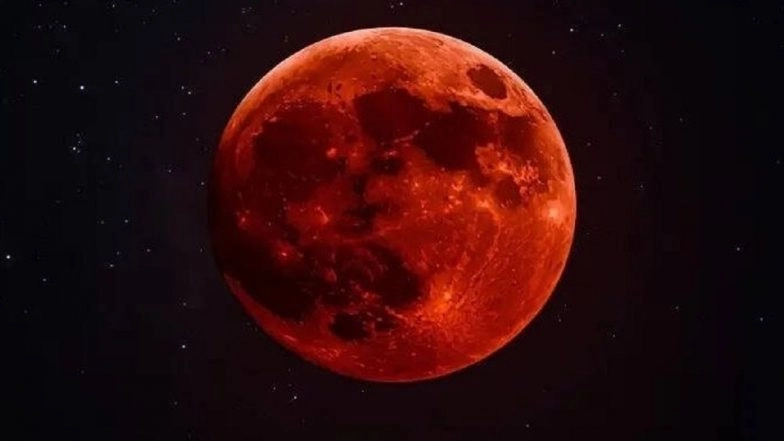
A total lunar eclipse or Chandra Grahan will occur on March 3, 2026, visible across the Americas and Europe. However, the event will not be visible in India as it occurs during daylight hours. Known as a Blood Moon, the eclipse features the Moon turning a deep red. Stargazers in India can watch the event via live global streams.

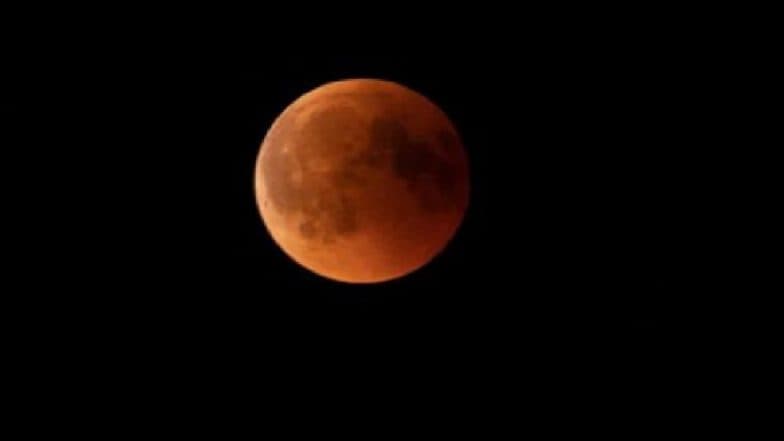
Mumbai, February 28: Stargazers are preparing for the first major celestial event of the year as a total lunar eclipse is set to occur on Tuesday, March 3. This "Blood Moon" will see the Earth pass directly between the Sun and the Moon, casting a deep reddish shadow across the lunar surface. The eclipse is expected to last for several hours, with the totality phase, where the Moon is completely obscured, lasting approximately 50 to 60 minutes.
While the event will be a global spectacle, its visibility depends heavily on geographical location. The eclipse will be primarily visible across the Americas, Western Europe, and parts of Africa. In these regions, the Moon will be well-positioned in the night sky during the peak of the eclipse. However, for observers in India, the timing of the event presents a challenge, as the eclipse will take place during the daylight hours when the Moon is below the horizon. Chandra Grahan on Holi 2026: India Visibility of Lunar Eclipse, Timings, Sutak Kaal, and Impact on Holika Dahan.
Chandra Grahan or Lunar Eclipse 2026: Visibility and Timing in India
According to astronomical data, the total lunar eclipse on March 3 will not be visible from any part of India. The penumbral phase is scheduled to begin early in the morning and conclude by midday local time. Since the Moon will have already set before the eclipse begins and will not rise again until the event has concluded, enthusiasts in the Indian subcontinent will miss the live viewing.
Despite the lack of direct visibility, many Indian science centers and astronomical societies plan to host virtual viewing sessions. These organizations will use live feeds from observatories in the Western Hemisphere to allow local students and hobbyists to witness the phenomenon in real-time online. Lunar Eclipse March 2026: Date, Time and Will It Be Visible in India?
What Happens During a Total Lunar Eclipse?
A total lunar eclipse occurs only during a Full Moon when the Moon enters the Earth’s central shadow, known as the umbra. Unlike a solar eclipse, which requires specialized eye protection, a lunar eclipse is safe to view with the naked eye.
The reddish hue that gives the event the name "Blood Moon" is caused by Rayleigh scattering. As sunlight passes through the Earth's atmosphere, shorter blue wavelengths are filtered out, while longer red wavelengths are bent toward the Moon. The intensity of the red color can vary depending on the amount of dust and clouds in the Earth's atmosphere at the time.
The March 3 eclipse is the first of two lunar eclipses scheduled for 2026. The second event, a partial lunar eclipse, will occur in late August. For observers in India, the next opportunity to witness a total lunar eclipse will not come until later in the decade, making these international live streams a vital resource for the local scientific community.
Astronomers note that 2026 is a significant year for lunar observations, as it coincides with several planetary alignments. These events provide crucial data for space agencies monitoring lunar cycles and atmospheric effects on light refraction.
(The above story first appeared on LatestLY on Feb 28, 2026 07:53 PM IST. For more news and updates on politics, world, sports, entertainment and lifestyle, log on to our website latestly.com).