













 Quickly
 Socially
 Trending
 Crypto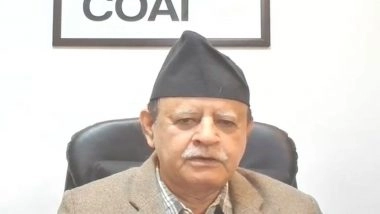
New Delhi [India], January 31 (ANI): Ahead of the upcoming Union Budget, the Cellular Operators Association of India (COAI) has called for a significant overhaul of the financial framework governing the telecom industry. Lt Gen (retd) Dr SP Kochhar, Director General of COAI, emphasised that the sector should be viewed not as a standalone industry but as the backbone of the entire economy.
Finance Minister Nirmala Sitharaman is scheduled to present the 2026-27 Union Budget on February 1.
Kochhar noted that the government's own vision aligns with this, stating, "In the words of our Minister, our telecom has become a value added horizontal sector that give value to all other sectors."
He stressed that maintaining the health of this infrastructure is a collective responsibility, adding, "That is very important sector and it is ours, government's and the industry's job to see that its working properly and in a sustainable manner."
A primary concern raised by the industry body is the high cost of spectrum, which continues to strain the balance sheets of service providers. Dr Kochhar pointed out that the current pricing model is counterproductive to revenue generation and network expansion. "There is a big problem and that is the spectrum prices that are charged. They are very high and we don't get much revenue as we should," he remarked.
He urged the government to recognise the essential nature of connectivity in the modern era, suggesting, "The spectrum pricing should be revisited and keep that in mind that today telecom is a horizontal value added service which will help telecom operators to create a whole network."
Beyond spectrum costs, the COAI is pushing for a reduction in the regulatory levies that currently consume 8% of the sector's earnings. Of this, 5% is allocated to the Digital Bharat Nidhi (formerly the USOF) and 3% to license fees.
Kochhar argued that these collections should be paused until the substantial funds already sitting in the government's coffers are utilised. "Our demand is that the amount that is already there in Digital Bharat Nidhi should be spent first, then we should be levied. If you are not able to spend that amount then why you taking more?" he questioned.
He proposed that the "Digital Bharat Nidhi should be held in abeyance" and that the license fee be slashed to between 0.5% and 1% so that only "administrative expenses are met."
Finally, the association highlighted a liquidity crisis caused by accumulated Input Tax Credits (ITC) under the GST regime. The industry currently has thousands of crores locked away in government accounts that can neither be used nor withdrawn.
To resolve this, the COAI has requested a sharp reduction in GST rates on regulatory payments. "Our demand from the government is that the GST on license fees and spectrum fees should be reduced from 18% to 5%," Dr. Kochhar stated. He concluded that such a move would be a win-win for both the state and the industry, noting, "It will not only help the government, but also benefit the industry as well." (ANI)
(The above story is verified and authored by ANI staff, ANI is South Asia's leading multimedia news agency with over 100 bureaus in India, South Asia and across the globe. ANI brings the latest news on Politics and Current Affairs in India & around the World, Sports, Health, Fitness, Entertainment, & News. The views appearing in the above post do not reflect the opinions of LatestLY)
 Share Now
 Google Trends



 Live Bot