













 Quickly
 Socially
 Trending
 Crypto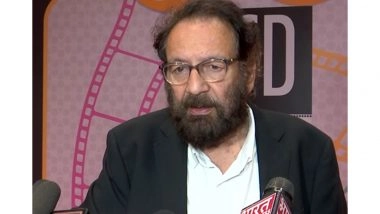
New Delhi [India], March 29 (ANI): Veteran filmmaker Shekhar Kapur announced a key update on the much-anticipated sequel to 'Masoom' at the International Film Festival Delhi 2026, where he also spoke about AI's transformative role and Indian cinema's global future.
Directed by Shekhar Kapur in his debut, the 1983 film 'Masoom' was a poignant Hindi drama about a family's struggle to accept an illegitimate son. Starring Naseeruddin Shah and Shabana Azmi, it featured soulful music by R D Burman and lyrics by Gulzar. The film was celebrated for its sensitive storytelling and remarkable performances by child actors Jugal Hansraj and Urmila Matondkar. The film swept the 1984 Filmfare Awards, winning Best Film (Critics), Best Actor (Naseeruddin Shah), and Best Music Director (R D Burman). Its iconic soundtrack includes the timeless ghazal 'Tujhse Naraz Nahin Zindagi', the playful children's classic 'Lakdi Ki Kaathi', and the soulful 'Do Naina Aur Ek Kahani'.
Tentatively titled 'Masoom: The Next Generation', the upcoming film will reunite original cast members Naseeruddin Shah and Shabana Azmi, alongside Manoj Bajpayee and a fresh ensemble of actors.
Kapur revealed the project during an interactive media session at the International Film Festival Delhi (IFFD) 2026, where he also shared extensive insights into the evolving landscape of global cinema and the growing impact of Artificial Intelligence.
Addressing the intersection of technology and art, Kapur highlighted AI's role in democratising the filmmaking process.
He noted that AI tools are breaking traditional barriers of budget and scale, allowing a young filmmaker with minimal resources to create visuals comparable to a high-budget cinematic production.
"Today, a child in 30,000 will make a film worth 300 crores," he said.
Kapur reflected on the analog era, recalling how it once took three hours to light a celluloid shot and how actors preferred specific cameras.
He observed that cinema has always created its own reality, but today, AI tools can instantly generate that reality from a simple written paragraph.
Despite this technological leap, Kapur emphasized the inherent limitations of AI, defining it as an algorithmic scraping tool devoid of true human instinct.
"AI is not instinctive... it is not intuitive," he remarked. He argued that while AI can replicate previously expressed feelings, it cannot generate original emotion, experience the fear of death, or fall in love.
Highlighting human unpredictability, he added, "I am mad sometimes. AI can't be mad. Not as mad as I can be. So, I must use that madness."
For Kapur, the primary challenge for modern directors is to cultivate their human intuition to outpace artificial intelligence.
Shifting focus to the global box office potential of Indian cinema, Kapur expressed immense confidence in the country's storytelling heritage.
He cited the epic Mahabharat as an unparalleled narrative, stating, "No one has ever told a story like Mahabharat. We are storytellers to the world... We need to find out how to tell stories so that the rest of the world understands them... Our filmmakers are just as good.."
To achieve global resonance, he urged filmmakers to bridge cultural gaps by adapting their storytelling language so international audiences can easily understand Indian folktales. (ANI)
(The above story is verified and authored by ANI staff, ANI is South Asia's leading multimedia news agency with over 100 bureaus in India, South Asia and across the globe. ANI brings the latest news on Politics and Current Affairs in India & around the World, Sports, Health, Fitness, Entertainment, & News. The views appearing in the above post do not reflect the opinions of LatestLY)
 Share Now
 Google Trends



 Live Bot