













 Quickly
 Socially
 Trending
 Crypto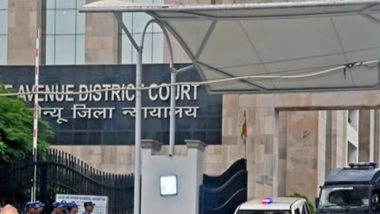
New Delhi [India], March 16 (ANI): A Rouse Avenue Court has acquitted three Uttar Pradesh police officers accused by the Central Bureau of Investigation (CBI) of failing to register an FIR in connection with the Unnao rape case, noting that the victim had not approached the police directly before lodging a complaint on the Chief Minister's grievance portal.
Delivering the judgment on March 14, ACJM Mayank Goel observed that the evidence on record showed that the complainant had initially filed a grievance on the Uttar Pradesh Chief Minister's IGRS portal, which was later forwarded through administrative channels to the police authorities only for conducting an inquiry and submitting a report.
Also Read | Why Did Bandhan Bank Share Fall Over 12% Today, March 16, 2026?.
The court noted that there was no material to show that the victim had approached the accused police officers, the Station House Officer, or the concerned police station with information about the alleged offence in the manner contemplated under Section 154(1) of the Criminal Procedure Code.
During cross-examination, the victim admitted that no complaint regarding sexual assault by former MLA Kuldeep Singh Sengar had been filed at any police station before submitting the complaint dated August 17, 2017, on the CM portal. The victim's mother also confirmed the same fact in her testimony before the court.
The case was registered against Kunwar Bahadur Singh, the then Circle Officer of Safipur; Dharam Prakash Shukla, the then Station House Officer of Police Station Makhi; and Digvijay Singh, the then Sub-Inspector posted at the same police station. The CBI had charged them under Section 166A of the Indian Penal Code, alleging that they failed to register an FIR despite receiving information about the alleged rape incident of June 4, 2017.
However, the court held that filing a complaint on the Chief Minister's grievance portal or similar online administrative platforms cannot be considered as furnishing information to the police under Section 154(1) CrPC, although such complaints may trigger administrative action.
The judge observed that the legal obligation to register an FIR arises only when information relating to a cognizable offence is directly given to the officer in charge of a police station, either orally or in writing. In the present case, the material on record only indicated that a grievance was forwarded to the police authorities for inquiry, after which the accused officers conducted a preliminary inquiry and submitted their reports as directed by their senior officials.
The court further observed that criminal liability under Section 166A IPC is penal in nature and must be strictly construed. Unless the prosecution establishes beyond a reasonable doubt that the accused public servant was directly placed in receipt of information about a cognizable offence and deliberately failed to record it, the offence cannot be made out.
The judge also clarified that although an FIR was subsequently registered and the accused in that case was ultimately convicted for rape, such later developments cannot by themselves establish that the police officers had knowingly disobeyed a legal mandate at the relevant time.
Holding that the prosecution failed to prove the essential ingredients of the offence, the court acquitted all three accused officers of charges under Section 166A IPC. The court also accepted the bail bonds of the accused under Section 437A CrPC and directed that the file be consigned to the record room after necessary compliance.
Senior Public Prosecutor Anurag Modi appeared for the CBI, while Advocate Surya Nath Pandey represented the accused persons. (ANI)
(The above story is verified and authored by ANI staff, ANI is South Asia's leading multimedia news agency with over 100 bureaus in India, South Asia and across the globe. ANI brings the latest news on Politics and Current Affairs in India & around the World, Sports, Health, Fitness, Entertainment, & News. The views appearing in the above post do not reflect the opinions of LatestLY)
 Share Now
 Google Trends



 Live Bot