













 Quickly
 Socially
 Trending
 Crypto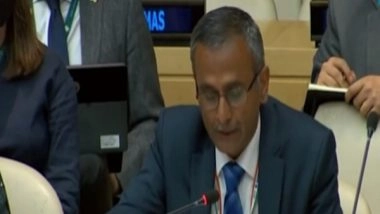
New York [US], April 29 (ANI): Speaking at the Economic and Social Council (ECOSOC), India's Deputy Permanent Representative to the UN, R Ravindra on Friday said that infrastructure investments, especially in low and middle-income countries must follow "principles of financial viability" to avoid unsustainable debt burdens on such countries.
"Investments in infrastructure or any other SDG sector must follow principles of financial responsibility and viability so that the projects don't create unsustainable debt burden," Deputy Permanent Representative R Ravindra said.
Also Read | Oklahoma Approves New Bill To Restrict Abortions After Six Weeks of Pregnancy.
"We have seen impact of such debt burden, and the social and political turmoil it (unsustainable debt) has brought about in many countries. All such investments should adhere to universally recognized norms of transparency, respect for sovereignty, national priorities," the Indian envoy added.
Ravindra also said that deliberations on dealing with challenges of debt vulnerabilities of low and middle-income countries should not duplicate mechanisms already in place for addressing these issues - such as G20, IMF, and World Bank.
Also Read | Former Afghan Army General Sami Sadat Prepares For New War Against Taliban.
The Indian envoy emphasized that strengthening productive capacities is a must for promoting sustainable growth - especially in Least Developed Countries (LDCS), Landlocked Developing Countries (LLDCS), Small Island Developing States (SIDS) and other vulnerable economies.
Talking about illicit financial flows, and the need for increased global cooperation on them, Ravindra said, "Financing of terrorism, cross-border tax evasion, and money laundering are key components of illicit financial flows. Need for enhanced international cooperation on these issues, including by building on existing platforms such as FATF."
India also pointed out that the developed countries' commitment of climate finance of USD 100 billion per year by 2020 is long overdue.
"The lack of an agreed definition for climate finance has led to uneven reporting by developed countries on their climate finance contributions under UNFCCC," Ravindra said. (ANI)
(The above story is verified and authored by ANI staff, ANI is South Asia's leading multimedia news agency with over 100 bureaus in India, South Asia and across the globe. ANI brings the latest news on Politics and Current Affairs in India & around the World, Sports, Health, Fitness, Entertainment, & News. The views appearing in the above post do not reflect the opinions of LatestLY)
 Share Now
 Google Trends



 Live Bot