Bhopal Gas Tragedy: Remembering How One of the World’s Worst Industrial Disasters Happened in India in 1984
The Bhopal Gas Tragedy is considered one of the world’s worst industrial disasters. It occurred on the night of December 2 and 3, 1984, at the Union Carbide India Limited (UCIL) pesticide plant in Bhopal, Madhya Pradesh

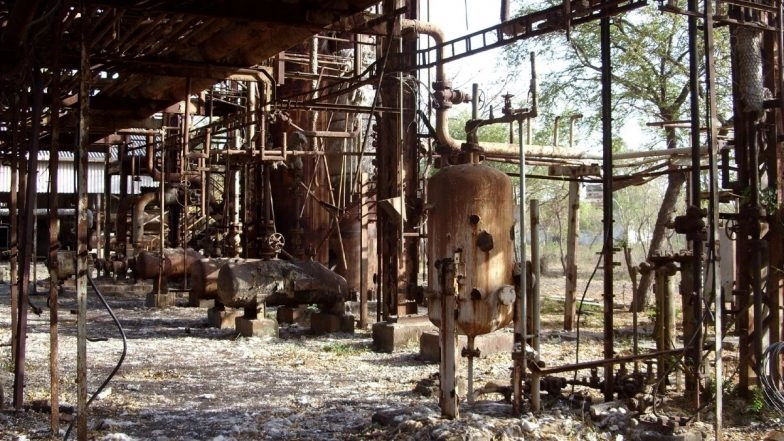
The Bhopal Gas Tragedy is considered one of the world’s worst industrial disasters. It occurred on the night of December 2 and 3, 1984, at the Union Carbide India Limited (UCIL) pesticide plant in Bhopal, Madhya Pradesh. As per historical records, a highly toxic gas, Methyl Isocyanate (MIC), leaked from a storage tank due to poor maintenance, safety lapses, and multiple system failures. The gas spread quickly over nearby densely populated areas, exposing hundreds of thousands of residents while they slept.
Every year, the victims of the tragic incident are remembered on December 2 and 3. In 2008, the Government of Madhya Pradesh paid compensation to the family members of victims killed in the gas release, and to the injured victims. In this article, let’s know about some key facts related to the tragic incident in Madhya Pradesh’s Bhopal. Bhopal Gas Tragedy: Recalling Sequence of Events That Led to World's Worst Industrial Disaster in 1984.
Here are some key facts:
- On December 3, 1984, over 500,000 people in the vicinity of the Union Carbide India Limited pesticide plant in Bhopal, were exposed to the highly toxic gas methyl isocyanate
- A government affidavit in 2006 stated that the leak caused approximately 558,125 injuries, including 38,478 temporary partial injuries and 3,900 severely and permanently disabling injuries.
- The owner of the factory, Union Carbide India Limited (UCIL), was majority-owned by the Union Carbide Corporation (UCC) of the United States, with Indian government-controlled banks and the Indian public holding a 49.1 percent stake.
- In 1989, UCC paid $470 million (equivalent to $1.03 billion in 2024) to settle litigation stemming from the disaster. In 1994, UCC sold its stake in UCIL to Eveready Industries India Limited (EIIL), which subsequently merged with McLeod Russel (India) Ltd.
- Civil and criminal cases filed in the United States against UCC and Warren Anderson, chief executive officer of the UCC at the time of the disaster, were dismissed and redirected to Indian courts on multiple occasions between 1986 and 2012, as the US courts focused on UCIL being a standalone entity of India.
- The Bhopal UCIL facility housed three underground 68,000-litre (18,000-US-gallon) liquid MIC storage tanks: E610, E611, and E619. In the months leading up to the December leak, liquid MIC production was in progress and being used to fill these tanks
- By early December 1984, most of the plant's MIC-related safety systems were malfunctioning and many valves and lines were in poor condition. In addition, several vent gas scrubbers had been out of service, as well as the steam boiler intended to clean the pipes, leading to this mishap
The Bhopal Gas Tragedy aims to increase public awareness about the dangers of pollution and its impact on health and the environment. This worst industrial accident led to global discussions on corporate responsibility, environmental justice, and industrial safety.
(The above story first appeared on LatestLY on Dec 02, 2025 05:03 AM IST. For more news and updates on politics, world, sports, entertainment and lifestyle, log on to our website latestly.com).