What Are New UGC Equity Regulations 2026 and Why Are There Protests Against Them?
The UGC Equity Regulations 2026 mandate strict anti-discrimination measures in Indian colleges, making heads of institutions directly accountable. Protests have erupted over the lack of safeguards against false complaints and the exclusion of general-category students from protection. Critics fear the rules could be misused to create a biased campus environment. Scroll below to know FAQs on the UGC controversy.

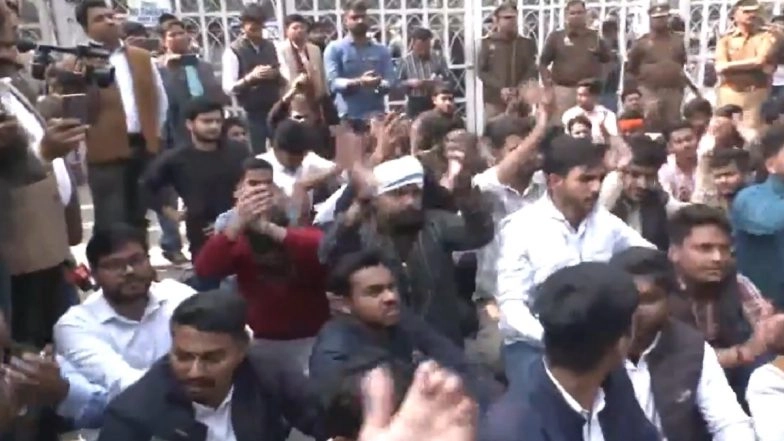
Mumbai, January 28: The University Grants Commission (UGC) has officially notified the Promotion of Equity in Higher Education Institutions Regulations, 2026, replacing a decade-old advisory framework with stringent, mandatory rules. Notified on January 13, the new regulations aim to dismantle "institutional casteism" by making college heads directly accountable for discrimination. However, the move has triggered a wave of protests across India, with critics labelling the rules "draconian" and "one-sided," leading to high-profile resignations and a legal challenge in the Supreme Court.
What Are the New Regulations?
The 2026 framework shifts equity from an advisory "guideline" to a legally enforceable "regulation." Under these rules, every Higher Education Institution (HEI) in India must establish a multi-layered security and redressal architecture. ‘There Will Be No Discrimination’: Education Minister Dharmendra Pradhan Breaks Silence on New UGC Regulations Controversy (Watch Video).
Key features of the 2026 regulations include:
- Mandatory Equal Opportunity Centres (EOC): Every college must have a dedicated centre to oversee equity policies.
- Equity Committees: Chaired by the Vice-Chancellor or Principal, these committees must include representatives from SC, ST, OBC, women, and PwD categories.
- Strict Timelines: Committees must meet within 24 hours of a complaint and submit an inquiry report within 15 working days.
- Equity Squads: Mobile units tasked with monitoring "vulnerable spots" on campus, such as hostels and laboratories, to prevent harassment.
- Severe Penalties: Non-compliant institutions face debarment from UGC funding, prohibition from starting new courses, or removal from the recognised list of universities.
Why Are There Protests?
Despite the government's stance that these rules are necessary to protect marginalised students, a "Rollback UGC" movement has gained momentum. Protesters, including student groups from Delhi University and Lucknow University, have raised several core concerns:
Fear of Misuse: Critics point out that the final version of the rules removed a draft clause that penalised "false or frivolous" complaints. They argue this could lead to the targeted harassment of faculty and general-category students.
Lack of Neutral Representation: Opponents argue that the Equity Committees do not mandate representation for the general/unreserved category, leading to fears of a biased inquiry process.
Surveillance Concerns: The introduction of "Equity Squads" has been described by some students as a form of constant campus surveillance that could stifle free expression and academic debate.
Vague Definitions: The term "discrimination" has been expanded to include any act that "impairs equality" or is "incompatible with human dignity," which critics claim is too broad and open to arbitrary interpretation.
The controversy has also taken a political turn. In Uttar Pradesh, a City Magistrate resigned in protest, calling the rules unfair to upper-caste students, while several local political leaders have stepped down, citing a "lack of due process" in the new framework. UGC: Large-Scale Protests Erupt Nationwide Against Revised University Grants Commission Regulations; Upper-Caste Groups Cry Discrimination (Watch Videos).
Frequently Asked Questions: Understanding the UGC Controversy
How do the 2026 rules differ from the 2012 guidelines?
The 2012 rules were largely advisory. The 2026 regulations are mandatory and include Other Backward Classes (OBCs) for the first time. They also fix direct personal accountability on the Head of the Institution (Principal/VC).
Is this a new law passed by Parliament?
No. These are regulations issued by the UGC under the powers granted to it by the UGC Act of 1956. They do not require a separate vote in Parliament to be implemented but have the force of law for universities.
Who is protected under these rules?
While the focus is on SC, ST, and OBC students, the regulations also cover discrimination based on religion, race, gender, place of birth, and disability for all students, faculty, and staff. What Is UGC Bill 2026? How the New Rules Aim to Curb Caste Bias on Campuses.
What is the status of the Supreme Court case?
A Public Interest Litigation (PIL) has been filed challenging Rule 3(c) of the regulations. The petitioner argues that the rules are "arbitrary" and violate Article 14 (Right to Equality) by excluding certain groups from the protection framework.
Has the government responded to the protests?
Union Education Minister Dharmendra Pradhan has assured the public that the rules will not be "misused" and that the government is open to clarifying "misunderstandings." The UGC has reportedly agreed to discuss adding a general-category member to the Equity Squads by mid-February.
Nationwide Protests Against UGC Equity Regulations 2026
The protests against the UGC Equity Regulations 2026 have intensified across the country, primarily led by students and faculty from the "general category" who label the new rules as "draconian" and "one-sided". Demonstrators at major institutions, including Lucknow University and the UGC headquarters in Delhi, argue that by removing the 2025 draft's penalty for false complaints, the commission has created a "presumption of guilt" that could be used to target innocent students and staff.
The backlash has even crossed into the administrative and political spheres, resulting in the resignation of Alankar Agnihotri, a City Magistrate in Bareilly, and several local BJP leaders who claim the regulations create a "caste-centric division" on campuses. While the government maintains that the rules are a necessary step to end institutional casteism, protesters demand an immediate rollback or the inclusion of "caste-neutral" protections to ensure the safety of all students regardless of their background.
(The above story first appeared on LatestLY on Jan 28, 2026 08:07 AM IST. For more news and updates on politics, world, sports, entertainment and lifestyle, log on to our website latestly.com).