Delhi Government Rolls Out Stray Dog Feeding Guidelines, Harassing or Threatening Feeders Now a Punishable Offence
Delhi has issued new Stray Dog Management and ABC Guidelines, making it illegal to harass or obstruct those responsibly feeding strays. RWAs must set up designated feeding spots, ABC centres face stricter rules, aggressive dogs go to shelters, and pet registration with updated vaccinations is mandatory.

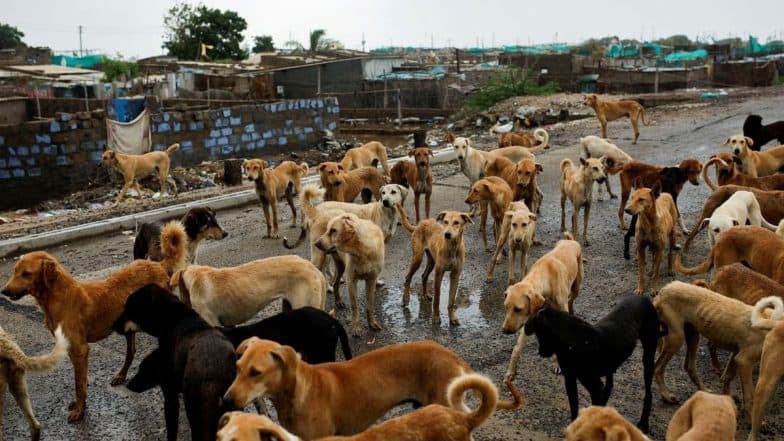
New Delhi, September 21: Delhi has rolled out new guidelines that significantly reshape how stray dogs are managed and cared for in the city. Issued by the Department of Urban Development under the Stray Dog Management and Animal Birth Control (ABC) Rules, 2023, the directives aim to strike a balance between public safety and humane treatment of animals.
A central feature of the guidelines is the legal protection for individuals who feed stray dogs responsibly. The government has clearly stated that “harassing, threatening, or obstructing anyone from feeding stray dogs” is a punishable offence. This safeguard is particularly crucial for women, senior citizens, and community caregivers who have often faced intimidation while feeding strays. Delhi Horror: 6 Injured After Drunk Men Unleash Dog on Neighbours, Attack With Rods in Subhash Park Area.
To make feeding organised, Resident Welfare Associations (RWAs) and local residents must designate feeding spots within their areas. These spots will be marked with signboards, chosen based on where stray dogs already live, and kept away from busy areas like playgrounds or senior citizen zones to reduce human-dog conflict. Stray Dogs To Be Released After Sterilisation, Public Feeding Banned: Supreme Court Modifies Previous Order, Directs MCD To Set Up Dedicated Feeding Zones.
The guidelines also strengthen the infrastructure of ABC centres, insisting on essentials such as kennels, operation theatres, transport vans, carcass disposal facilities, CCTV coverage, and trained staff. Dogs showing aggressive behaviour must be housed permanently in shelters recognised by the Animal Welfare Board of India (AWBI). Rabid dogs, on the other hand, are to be isolated until natural death, with their remains handled scientifically.
Pet ownership rules are also tightened. All dogs above three months must be registered with local bodies, with owners required to keep vaccinations updated. Encouragement is provided for adopting Indian breeds — registration is free, and sterilisation and the first vaccination come at no cost.
In practice, this means responsible feeding — done at designated spots with hygiene and coordination — is now officially protected by law. Civic bodies such as MCD, NDMC, and the Cantonment Board will oversee implementation, manage disputes, and monitor ABC centres. A 24/7 helpline and online portals will allow citizens to report dog bites, rabies cases, or guideline violations.
Delhi’s new rules attempt to resolve the long-standing tensions between animal feeders and residents concerned about safety. If implemented strictly, they could ensure better care for stray animals while reducing conflicts in neighbourhoods.
(The above story first appeared on LatestLY on Sep 21, 2025 02:20 PM IST. For more news and updates on politics, world, sports, entertainment and lifestyle, log on to our website latestly.com).