Apple Surpasses Samsung To Become World’s Top Smartphone Brand in 2025: Counterpoint Report
Apple overtook Samsung to become the world’s top smartphone maker in 2025, capturing a 20 per cent market share, according to Counterpoint Research. Strong iPhone 17 demand and premiumisation trends drove growth, while Samsung slipped to second place amid intense global competition.

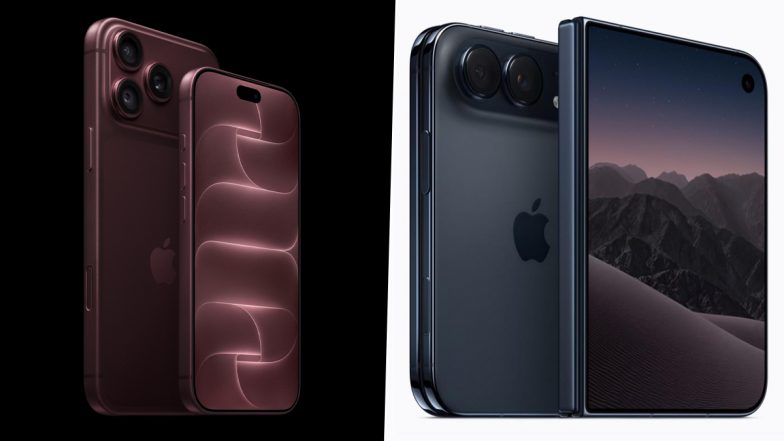
Mumbai, January 13: Apple has officially overtaken Samsung to become the world’s leading smartphone manufacturer in 2025, according to the latest data from Counterpoint Research. This shift marks the first time in 14 years that the American technology giant has outpaced its South Korean rival in annual global shipments. Driven by the successful launch of the iPhone 17 series and a surging demand for premium devices, Apple secured a 20 per cent share of the international market, recording the highest year-on-year growth among the top five industry players.
The global smartphone market saw a modest expansion of 2 per cent in 2025 as consumers began replacing older devices purchased during the pandemic, as per a report by Counterpoint Technology Market Research. Apple’s rise to the top was fueled by a 10 per cent increase in sales compared to 2024, with the final quarter of the year seeing the company capture a record 25 per cent of all global shipments. Analysts noted that while the iPhone 17 drove high-end volume, the continued popularity of the iPhone 16 in regions like India, Japan, and Southeast Asia provided a stable foundation for this historic achievement. Elon Musk Sharply Criticises Apple-Google AI Deal, Calls It ‘Unreasonable Concentration of Power’ of Tech Giants.
Apple Performance and Growth Drivers
The iPhone 16 emerged as the top-selling smartphone in India last year, highlighting Apple's successful expansion into emerging markets that were traditionally dominated by Android manufacturers. Beyond new hardware, Apple benefited from a significant replacement cycle reaching millions of users who had delayed upgrades in previous years. This "premiumisation" trend, where consumers opt for more expensive, long-lasting handsets, played directly into Apple’s strengths, allowing the company to lead both in terms of revenue and unit shipments.
Samsung and Android Competition
Samsung dropped to second place with a 19 per cent market share, despite seeing a 5 per cent year-on-year growth in its own right. The company’s performance was bolstered by its mid-range A series and the high-end Galaxy S25 and Z Fold 7 models. However, Samsung faced notable headwinds in Latin America and Western Europe, which offset gains made in Japan and its other core markets. While Samsung remains a dominant force, the narrow gap between the two leaders suggests a highly competitive landscape heading into 2026. Apple and Google Announce Landmark Multi-Year AI Deal To Power Next-Generation Siri and Apple Intelligence Features.
Xiaomi and Other Leading Brands
Xiaomi retained its position as the third-largest smartphone brand globally, holding a 13 per cent market share through a balanced strategy of premium features and effective distribution in emerging markets. Meanwhile, Vivo saw a sales increase of 3 per cent, but Oppo faced a 4 per cent decline in global sales due to intensified competition within China and the broader Asia-Pacific region. Despite its global dip, Oppo managed to record growth in India, the Middle East, and Africa, indicating a shift in its regional priorities.
(The above story first appeared on LatestLY on Jan 13, 2026 12:35 PM IST. For more news and updates on politics, world, sports, entertainment and lifestyle, log on to our website latestly.com).