NASA Satellite Crash Alert: 1,323-Pound Van Allen Probe A Set to Re-enter Earth After 14 Years in Space
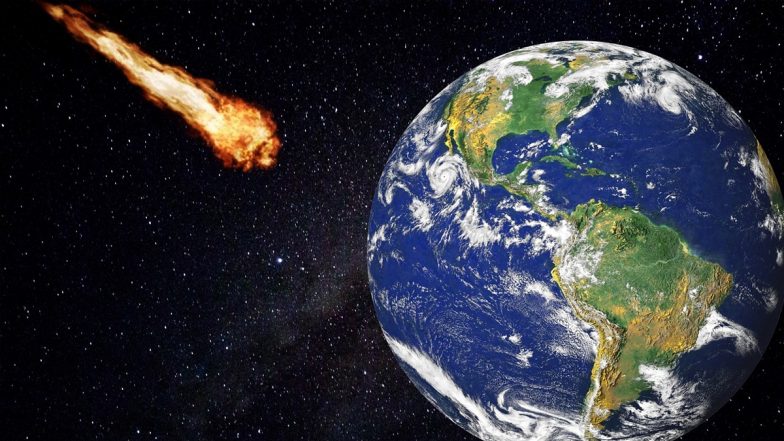
A NASA Satellite Crash is expected as the agency’s Van Allen Probe A, a 1,323-pound decommissioned spacecraft, is set to re-enter Earth’s atmosphere on Wednesday, nearly 14 years after its launch. NASA and the U.S. Space Force are closely tracking the spacecraft’s descent as it gradually falls back toward Earth due to orbital decay.

Chennai, March 11: A NASA Satellite Crash is expected as the agency’s Van Allen Probe A, a 1,323-pound decommissioned spacecraft, is set to re-enter Earth’s atmosphere on Wednesday, nearly 14 years after its launch. NASA and the U.S. Space Force are closely tracking the spacecraft’s descent as it gradually falls back toward Earth due to orbital decay. Most of the satellite is expected to burn up during atmospheric re-entry, although officials say some heat-resistant components could survive and reach the ground. Despite the dramatic return, authorities stress that the risk to public safety is extremely low, with the probability of human injury estimated at about 1 in 4,200.
According to the latest tracking data from the U.S. Space Force, the spacecraft is predicted to enter the atmosphere at approximately 7:45 p.m. EDT on March 10, 2026. However, experts note that atmospheric conditions and orbital mechanics can shift the timing by as much as 24 hours earlier or later. Because of this uncertainty, the exact location where any surviving debris might land cannot be determined until shortly before re-entry. Meanwhile, the satellite’s twin, Van Allen Probe B, remains in orbit and is currently expected to stay operational in space until at least 2030. NASA Artemis II Moon Mission 2026 Update: US Space Agency Rolls Back Moon Mission Over New Technical Problems.
The Van Allen Probes mission began with the launch of two identical spacecraft on August 30, 2012. Although initially planned as a two-year mission, the probes operated for nearly seven years, significantly exceeding expectations. Their mission was to study the Van Allen radiation belts, two regions of high-energy charged particles trapped by Earth’s magnetic field. These belts play a crucial role in shielding the planet from harmful solar radiation and cosmic particles. NASA Advances Artemis II Efforts With Key Vehicle Confidence Test Ahead of Moon Mission.
By flying directly through these intense radiation zones, the probes collected valuable data that improved scientists’ understanding of how solar storms interact with Earth’s magnetic environment. This research has helped improve forecasting of space weather events that can disrupt satellites, communication systems, and power grids, as well as pose risks to astronauts in orbit.
The mission officially concluded in 2019 after both spacecraft ran out of fuel, preventing them from maintaining the orientation needed to keep their solar panels facing the Sun. Early projections had suggested the satellites might remain in orbit until around 2034, but atmospheric drag gradually pulled Van Allen Probe A closer to Earth, accelerating its return. The mission was managed by the Johns Hopkins University Applied Physics Laboratory, which noted that the probes were specifically engineered to withstand the harsh radiation environment while continuously transmitting critical scientific data.
Even years after the mission ended, the data collected by the Van Allen Probes continues to support research in space weather science and satellite safety, making the mission one of NASA’s most significant contributions to understanding Earth’s radiation environment.
(The above story first appeared on LatestLY on Mar 11, 2026 07:27 AM IST. For more news and updates on politics, world, sports, entertainment and lifestyle, log on to our website latestly.com).