Paris Agreement 10 Years On: More Wins Than You May Realize
Major emitter the US has officially left the Paris Agreement and global emissions keep rising a decade on from the deal.

Major emitter the US has officially left the Paris Agreement and global emissions keep rising a decade on from the deal. Yet renewables' growth shows climate action can work. Here's what's been done and what's missing.As the gavel came down to seal the Paris Agreement in 2015, tears fell, world leaders joined hands and attendees of the UN COP21 climate summit erupted in a standing ovation.
Also Read | India News | Karnataka: Congress Holds ‘Lok Bhavan Chalo’ Protest in Bengaluru over VB-G-RAM-G Act.
It marked a pivotal moment in climate action. For the first time, nearly 200 nations adopted a binding treaty to limit global warming well below 2 degrees Celsius (3.6 degrees Fahrenheit), while striving to cap the rise at 1.5 C.
Also Read | Business News | Hexaware is the Second-Fastest-Growing Indian IT Services Brand by Brand Value.
Scientists consider the 1.5 C threshold a critical line of defense against climate change's most severe and irreversible damage. The UN has now said overshooting this, at least temporarily, is "inevitable" with "devastating consequences" for the world.
Despite some remarkable leaps in climate action since that moment in Paris, experts warn the world stands at a critical juncture. As countries continue to burn oil, gas and coal, temperatures are rising, causing deadly storms, flooding and heat.
The past decade has been the hottest on record, with last year topping the grim streak.
The world's second-largest emitter, the US, is also now officially out of Paris Agreement for the second time. President Donald Trump signed the executive order to leave the accord on the day of his inauguration a year ago. Trump also recently pledged to pull the country from a raft of other global environmental pacts.
Temperatures have climbed since the Paris Agreement
As world leaders gather in Belem, Brazil, for 2025's global climate summit, COP30, scientists warned that, however warm the world has already become, every fraction of a degree still counts — making the difference between the safety and suffering of millions of people.
Rising heat is killing roughly one person per minute, and air pollution from the burning of fossil fuels claims an estimated 2.5 million lives every year.
It is also taking a considerable toll on the economy, costing as much as $304 billion in global economic losses in 2024, according to research published in the Lancet, a peer-reviewed medical journal.
Meanwhile, critical ecosystems are being pushed beyond their limits. Last year, the world passed its first climate "tipping point," a threshold that triggers irreversible change, with warming oceans causing mass coral die-offs. Coral reefs are one of the world's most biodiverse ecosystems, supporting a quarter of marine life.
Scientists warn other tipping points, such as the dieback of the Amazon rainforest and collapse of vital ocean currents, are dangerously close.
What is happening to emissions?
This critical state has been driven by the continued burning of fossil fuels in the decade since the Paris Agreement was reached. In 2024, greenhouse gas emissions reached record levels and are now 65% higher than 1990 levels.
To keep the Paris Agreement goals within the world's grasp, emissions should already be peaking and beginning to plummet. But a recent analysis revealed no sign of a slowdown.
Absolute emissions soared in 2024, with human activities — namely, the burning of coal, oil and gas — sending a record of 53.2 gigatons of CO2 equivalent emissions into the atmosphere.
Two-thirds of this came from just eight economies: China, the US, the European Union, India, Russia, Indonesia, Brazil and Japan. Of those big polluters, only the EU and Japan decreased their annual emissions compared to 2023.
The vast majority of this comes from the energy sector, which powers our lives and economies.
What has been achieved since 2015?
While climate action overall is critically lagging, there are pockets of striking progress.
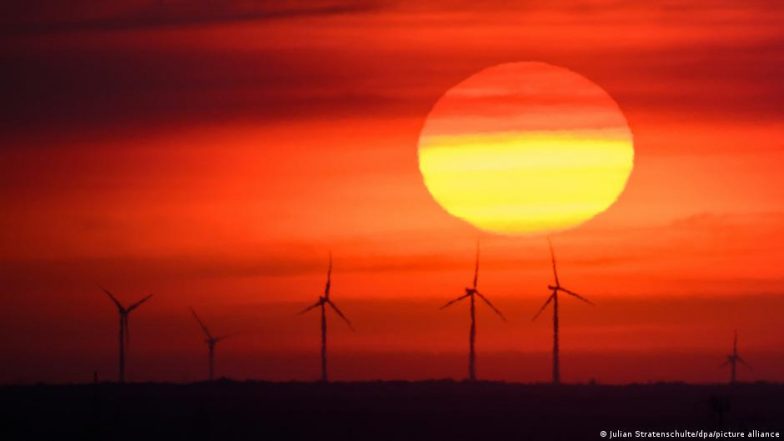
Global growth in renewables has skyrocketed, even exceeding the expectations of optimists. Plummeting costs are helping to drive the boom, with investments in clean energy growing and now doubling those going into fossil fuels.
The share of global energy provided by renewables has more than tripled since the Paris Agreement.
In 2024, the world experienced its largest-ever increase in renewable energy generation, which now provides 40% of global electricity. In the first half of this year solar and wind exceeded all demand growth for electricity, surpassing coal for the first time.
Global solar capacity is over four times what was predicted in 2015, doubling every three years. Wind has tripled, according to analysis from the Energy and Climate Intelligence Unit, a UK-based non-profit.
Even in the US, where President Donald Trump's administration has slashed financial support and tax credits for renewable energy sources and has placed restrictions on new solar and wind projects, growth has been positive.
Between January and September 2025, green power dominated US capacity growth, according to consultancy Deloitte. Renewables plus battery storage made up 93% of new capacity added to the grid.
But China is the country leading the pack, having in 2024 installed more solar capacity — now 1,000 times greater than it was in 2010 — than the rest of the world combined.
In the last decade, electric vehicles have surged from around 1% of car sales to almost a quarter. The world is on track to reach the Paris Agreement target of 100 million vehicles on the road by 2030 ahead of schedule.
Yet there are important caveats to this progress. Renewables might be breaking records, but so is coal: the dirtiest fossil fuel hit a record high in overall global use last year. And while more money is pouring into green energy, public finance for fossil fuels has also increased to $1.6 trillion (€1.37 trillion) per year.
Will the world fulfill the Paris Agreement goals?
Experts warn that current climate action is still woefully off track.
Without the Paris Agreement, the world could have faced 4 C of warming by the end of the century. Under the accord, countries have to submit national climate action plans. If fully implemented, those are predicted to limit temperature rise to about 2.3 to 2.5 C. Still, even under that less drastic scenario, the world will face far more extreme heat, storms and rising sea levels.
Ahead of the climate summit in Belem, countries were still scrambling to submit new climate commitments, and more than 65 countries have still not delivered their new pledges.
A recent UN analysis of national pledges estimates that global greenhouse gas emissions will decrease by approximately 12% by 2035 compared to 2019 levels.
But the world is still on track to overshoot the 2 C temperature limit and needs to see an enormous acceleration in ambition and emission reductions across all sectors, according to the recent State of Climate Action report.
This includes phasing out coal 10 times faster this decade, increasing efforts to halt deforestation by nine-fold, doubling renewables growth, increasing global climate finance by nearly $1 trillion per year, and rapidly expanding public transport infrastructure in the world's most polluting cities.
Additional reporting by Katharina Schantz.
Edited by: Tamsin Walker
This article was originally published on 12 November 2025, and was updated on 27 January 2026, to reflect that the US withdrawal from the Paris Agreement had come into effect.
(The above story first appeared on LatestLY on Jan 27, 2026 01:50 PM IST. For more news and updates on politics, world, sports, entertainment and lifestyle, log on to our website latestly.com).