Simple Rangoli, Muggulu, Kolam Design Ideas For Makar Sankranti 2026
As the kites soar high and the sun changes its course this Makar Sankranti, let these Rangoli, Kolam & Muggulu designs be a reflection of the creativity and abundance you wish to invite into your life in 2026. Here’s wishing you a vibrant, artistic, and prosperous Uttarayan!

- Read in
- हिंदी
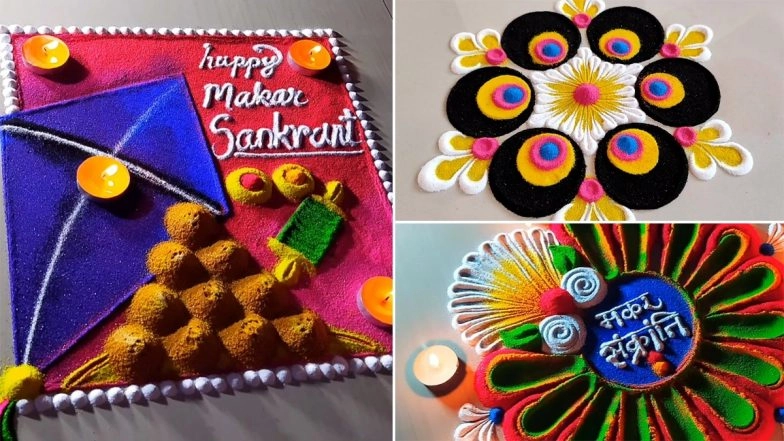
As the sun begins its journey towards the Northern Hemisphere, marking the auspicious period of Uttarayan, homes across India are gearing up for Makar Sankranti. Whether you call it Pongal, Lohri, or Sankranti, no celebration is complete without the vibrant tradition of Rangoli (or Muggulu/Kolam).
For 2026, the trends are blending traditional geometric precision with modern, colourful storytelling—and even Artificial Intelligence. If you are looking to deck up your doorstep or your digital feed this January 14, here is your complete guide. Is 1st January 2026 the Hindu New Year?
Simple Rangoli, Muggulu, Kolam Design Tutorial and Ideas For Makar Sankranti 2026
The 'Kite and Manjha' Special Rangoli (Uttarayan Theme)
Since kite flying is synonymous with Makar Sankranti, this rangoli design is a perennial favourite.
The Design: Create three or four diamond-shaped "kites" in bright primary colours (red, yellow, blue) connected by a thread (manjha) made of white rangoli powder.
2026 Twist: Add the text "Happy Uttarayan 2026" inside the largest kite. You can surround the kites with cloud patterns or small birds to mimic a sky scene.
The Overflowing Pongal Pot (Bhogi Kundala)
Essential for those celebrating Pongal, this design symbolises abundance and prosperity.
The Design: Draw an earthen pot (kalash) with milk overflowing from the brim. Add stalks of sugarcane on either side of the pot.
Detailing: Use turmeric (yellow) and kumkum (red) to decorate the pot. For a realistic look, use white rice flour for the "milk" spilling over the sides.
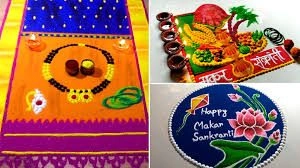
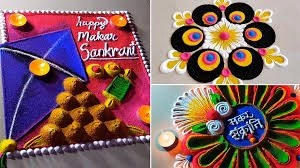
Sample Images of Makar Sankranti Rangoli Designs
Symmetrical 'Chukkala Muggulu' (Dot Rangoli)
Perfect for beginners who want a complex look without the freehand struggle.
The Design: Start with a simple 5x3 or 7x1 dot grid. Connect the dots to form geometric flowers or star patterns.
Why it works: These designs are mathematically symmetrical and are believed to trap negative energy. They look best in simple white powder on a damp, cow-dung-washed floor.
The 'Surya Dev' Circular Pattern Rangoli
Since Sankranti is a solar festival, paying homage to the Sun God is considered very auspicious.
The Design: A large central circle representing the Sun, painted in gradients of orange and yellow. Radiating outwards, draw flames or sun rays.
Embellishment: Place a real *diya* (oil lamp) in the absolute centre of the sun design to bring it to life in the evening.
Floral Peacock with Grain Rangoli
A fusion of art and nature, celebrating the harvest.
The Design: A freehand peacock where the feathers are filled not just with colours, but with actual grains (rice, pulses, lentils).
Significance: This eco-friendly approach feeds ants and birds, which is a traditional act of charity encouraged during Sankranti.
Video Tutorials and Design Ideas for Makar Sankranti Rangoli Design
Makar Sankranti Rangoli Design:
Easy Makar Sankranti Kite Rangoli Design:
Beautiful Makar Sankranti Rangoli Tutorial:
Tech Trend: Create Digital Rangoli Greetings with AI
Not everyone has the time or space for a physical Rangoli, but that doesn't mean you can't share the festive spirit. A growing trend for 2026 is using AI tools to create hyper-realistic "Digital Rangolis" for WhatsApp statuses and Instagram stories. Can't make Rangoli, but can at least flaunt them!
Here are two ready-to-use prompts you can try in AI art generators (like Midjourney or DALL-E) to create stunning custom greetings with Rangoli Designs:
Rangoli Prompt Option A: For a Traditional Pongal Vibe
"A detailed documentary-style photograph of a vibrant traditional Pongal Kolam rangoli on a rustic, cow-dung washed doorstep in South India. The central element is a decorated earthen clay pot with white milk frothing and overflowing down its sides, symbolizing abundance. Two tall sugarcane stalks with leaves lean against the pot. The rangoli patterns are intricate geometrical designs made with white rice flour and turmeric. Golden hour morning sunlight. --ar 4:5"
Rangoli Prompt Option B: For a Colourful Kite Festival Vibe
"A top-down photograph of a large, colorful Makar Sankranti rangoli design on a paved courtyard floor. The design features diamond-shaped kites in primary colors of bright red, sunny yellow, and royal blue. The kites are connected by a swirling 'manjha' string pattern made of white powder. Inside the largest central red kite, the text 'HAPPY UTTARAYAN 2026' is written in white rangoli powder. Bright daylight. --ar 1:1"
Pro-Tips for Your Real Rangoli This Makar Sankranti
Use Eco-Friendly Colours: If you are making designs in an apartment hallway, use flower petals (Pookalam style) to keep it stain-free.
The 'Haldi-Kumkum' Border: Regardless of the design, always finish with a border of turmeric and vermilion dots for auspiciousness.
Cheat Code: If short on time, use a stencil for the centre and draw simple freehand vines extending outwards to enlarge the design.
Whether you choose to get your hands messy with vibrant colours on your doorstep or craft a pixel-perfect greeting on your screen, the essence of Makar Sankranti remains the same, spreading warmth and joy. As the kites soar high and the sun changes its course this January, let these Rangoli, Kolam & Muggulu designs be a reflection of the creativity and abundance you wish to invite into your life in 2026. Here’s wishing you a vibrant, artistic, and prosperous Uttarayan!
(The above story first appeared on LatestLY on Jan 09, 2026 04:00 PM IST. For more news and updates on politics, world, sports, entertainment and lifestyle, log on to our website latestly.com).