The Most Powerful Man in Iran: How Ayatollah Ali Khamenei Built His Power and Expanded His Family’s Influence
As Iran enters mid-January 2026, the Islamic Republic is gripped by its most significant existential crisis since the 1979 Revolution. At the center of this turmoil is the 86-year-old Supreme Leader, Ayatollah Ali Khamenei, whose 36-year tenure has made him the ultimate arbiter of the nation’s destiny.

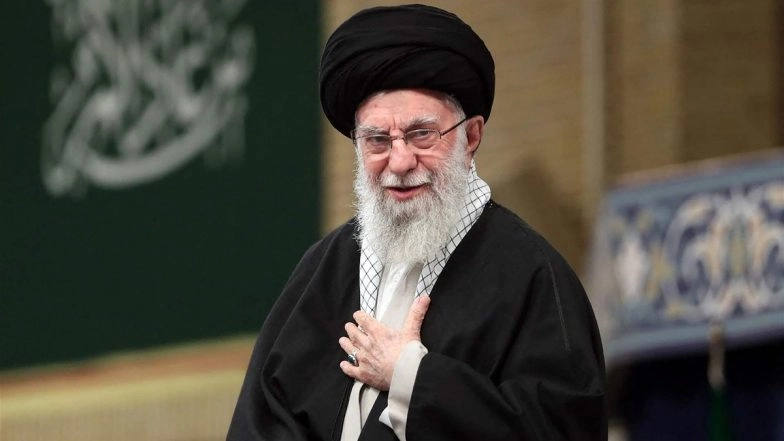
Tehran, January 13: As Iran enters mid-January 2026, the Islamic Republic is gripped by its most significant existential crisis since the 1979 Revolution. At the center of this turmoil is the 86-year-old Supreme Leader, Ayatollah Ali Khamenei, whose 36-year tenure has made him the ultimate arbiter of the nation’s destiny. As the longest-serving head of state in the Middle East, Khamenei remains the final authority over Iran’s military, judiciary, and the powerful Islamic Revolutionary Guard Corps (IRGC), yet his tightening grip is facing an unprecedented challenge from a population pushed to its breaking point
The Ultimate Arbiter: How Powerful is Khamenei?
Under the Iranian constitution, the Supreme Leader holds a level of authority that exceeds that of any elected official. While the Iranian President manages day-to-day administration, Khamenei holds the "Velayat-e Faqih" (Guardianship of the Islamic Jurist), granting him absolute control over the state's most critical pillars. ‘Rioters Must Be Put in Their Place,’ Says Iran’s Supreme Leader Ayatollah Ali Khamenei as Death Toll Rises to at Least 10; Acknowledges ‘Fair’ Economic Grievances.
He personally appoints the head of the judiciary, the commanders of the armed forces, and six of the twelve members of the Guardian Council, which determines who can run for office. Perhaps most importantly, he commands the IRGC, a parallel military and economic empire that controls nearly 40% of the Iranian economy. From nuclear policy to regional alliances, no high-level decision in Iran is made without his explicit approval, making him the "unchallengeable" decision-maker in a complex theocratic system.
Why Iran is Protesting
The current wave of demonstrations, which erupted in late December 2025 and has spread to all 31 provinces, is driven by a catastrophic economic collapse that has evolved into a full-scale political uprising.
-
Currency Crisis: The Iranian rial has plummeted to historic lows, recently crossing 1.5 million to the U.S. dollar, effectively wiping out the savings of the middle class.
-
Cost of Living: Inflation has surged past 40%, with food prices rising by over 70% in a single year. Basic staples have become luxuries for many families.
-
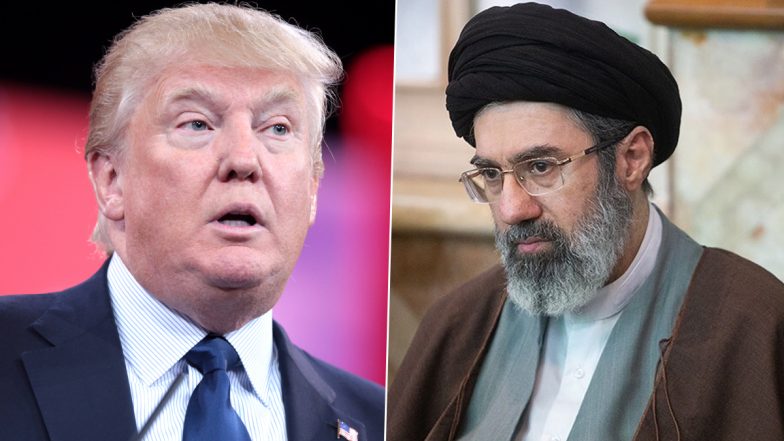
Demand for Change: What began as a strike by merchants in Tehran’s Grand Bazaar has transformed into a nationwide movement. Protesters are now openly calling for the end of clerical rule, with slogans targeting Khamenei himself—a move that was once unthinkable. 'Some Rioters Are Trying to Please Donald Trump by Attacking Public Property': Iran’s Supreme Leader Ayatollah Ali Khamenei Warns Protesters in National Address.
The Influence of the Khamenei Family
While the Supreme Leader maintains a public persona of religious asceticism, his family operates within the highest echelons of power. His children—four sons and two daughters—rarely appear in the media, yet they wield substantial behind-the-scenes influence.
-
Mojtaba Khamenei: The second son is widely viewed as the most powerful family member and a potential successor. Deeply linked to the security apparatus and the IRGC, he is often described as the "gatekeeper" to his father.
-
Masoud and Meysam: The younger sons are embedded in the regime’s institutional framework. Masoud is married into the influential Kharazi family and manages several of his father's religious and economic institutions. Meysam works within the office responsible for archiving the Leader's works and is married into a prominent merchant family, bridging the gap between the clergy and the traditional bazaar.
-
Boshra and Hoda: The Supreme Leader’s daughters are married into powerful political and clerical families—the Mohammadi-Golpayeganis and the Bagheris—reinforcing the alliances that underpin the current power structure.
The Question of Succession
The most pressing issue in early 2026 is the question of who will follow the aging leader. Speculation has intensified following reports of Khamenei’s receding from public life. While Mojtaba Khamenei has emerged as a leading candidate, the prospect of a father-to-son transition faces internal pushback. Many within the clerical establishment argue that hereditary succession would undermine the revolutionary principle of rejecting monarchy, potentially fracturing the regime from within.
A Legacy at a Crossroads
As the protests enter a volatile new phase and the "Axis of Resistance" faces regional setbacks, the Iranian government has responded with a near-total internet blackout and a heavy security crackdown. Human rights monitors report hundreds of fatalities as the state attempts to regain control.
The coming months will likely determine whether the Islamic Republic can manage a peaceful transition or if the 2026 uprising marks the beginning of a fundamental systemic change. For the Khamenei family, the stakes have shifted from preserving political influence to the very survival of their forty-year legacy.
(The above story first appeared on LatestLY on Jan 13, 2026 04:50 PM IST. For more news and updates on politics, world, sports, entertainment and lifestyle, log on to our website latestly.com).