How To Spot a Fake Website? PIB Fact Check Shares 5 Simple Tips To Identify Fraudulent Sites and Stay Safe From Online Scams
Amid rising cyber fraud and increasing online scams, the Press Information Bureau (PIB) Fact Check has issued an advisory to help citizens stay safe in the digital space. On Sunday, June 29, PIB shared a quick guide on how to identify fake websites and avoid falling into online traps. So, let’s know how to spot a fake website.

Mumbai, June 29: Amid rising cyber fraud and increasing online scams, the Press Information Bureau (PIB) Fact Check has issued an advisory to help citizens stay safe in the digital space. On Sunday, June 29, PIB shared a quick guide on how to identify fake websites and avoid falling into online traps. With the growing number of fraudulent sites mimicking government portals and e-commerce platforms, awareness is key to protecting personal and financial data. Indian Oil Offering INR 6,000 Fuel Subsidy Gift? PIB Fact Check Debunks Fake Lucky Draw Going Viral.
The advisory highlights common warning signs that users should watch out for. The message, shared with the caption “Don’t fall for online traps!”, breaks down how users can distinguish between real and fake websites in simple terms. PIB outlines practical safety measures for everyone, from checking the website URL to identifying suspicious offers and missing contact details. The advisory encourages internet users to be vigilant and cautious while browsing or shopping online. So, let’s know how to spot a fake website. Narendra Modi Govt Giving Laptops To Students Free of Cost Under ‘Free Laptop Scheme 2025’? PIB Fact Check Debunks Fake News Going Viral.
PIB Fact Check Shares Tips to Spot Fake Websites:
🚨 Don’t fall for online traps!
Before clicking, make sure the website is real.
Spotting a fake site is easier than you think!#PIBFactCheck:
🔍 Check the URL (look for https & spelling errors)
🔒 No padlock icon? Don’t trust it
📞 No contact info or shady About page? 🚩… pic.twitter.com/xqMFilBoEJ
— PIB Fact Check (@PIBFactCheck) June 29, 2025
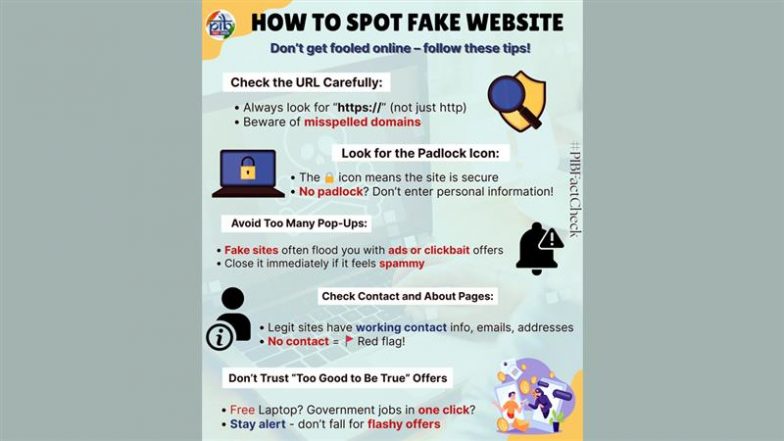
How to Spot a Fake Website:
- Check the URL Carefully: Make sure it starts with "https://" instead of just "HTTP." Also, look for spelling mistakes or odd characters in the domain name.
- Look for the Padlock Icon: A padlock symbol near the URL indicates a secure site. If there’s no padlock, avoid entering any personal or financial information.
- Avoid Too Many Pop-Ups or Flashy Ads: Fake websites often flood users with pop-ups, clickbait, or "too good to be true" offers. If the site feels spammy, close it immediately.
- Check the Contact and About Pages: Legitimate websites usually provide working phone numbers, email addresses, and a physical address. If these details are missing or look shady, it’s a red flag.
- Be Wary of Unrealistic Offers: Promises like "Free laptops" or "Government job in one click" are usually scams. Always remember, if it sounds too good to be true, it probably is.
By following these simple yet effective steps, users can protect themselves from falling victim to online scams and fraudulent websites. Always verify the authenticity of a site before sharing personal or financial details. Remember, cybercriminals often exploit trust and urgency, so take your time to check carefully.
(The above story first appeared on LatestLY on Jun 29, 2025 06:34 PM IST. For more news and updates on politics, world, sports, entertainment and lifestyle, log on to our website latestly.com).