Lalbaugcha Raja and Koli Samaj – What Is the Connection? Know Ganesh Visarjan Rituals of Mumbai’s Iconic Ganpati Idol at the Girgaon Chowpatty
Lalbaugcha Raja is the ‘sarvajanik’ Lord Ganesha idol kept at Lalbaug, a locality in Mumbai. The idol is placed for darshan to the devotees throughout the 10-day festival and immersed in the Arabian Sea at Girgaon Chowpatty. To understand the significance of the Koli Samaj and local fishermen, one has to explore the history of Lalbaugcha Raja.

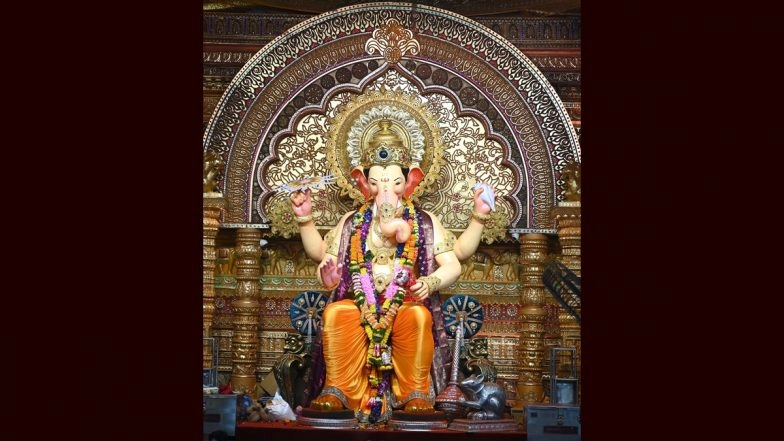
In the late hours on September 7, fervent chants of “Ganpati Bappa Morya, Pudhchya varshi lavkar yaa” (My Lord Ganesha, come soon next year) rose in the air around Mumbai’s Girgaon Chowpatty as thousands of devotees gathered to witness the immersion of the Lalbaugcha Raja idol in the sea. However, this year’s immersion saw a significant delay, rising conversations and interests in common devotees around the history of Lalbaugcha Raja and Ganpati Bappa’s visarjan rituals at the Girgaon Chowpatty. Following a more than 12-hour delay after its usual time, the Koli community members and fishermen were instrumental in the final immersion of the Lord Ganesha idol. Lalbaugcha Raja and Koli Samaj – what is the connection? The unusually delayed immersion of Lalbaugcha Raja raised curiosity among the devotees about the history of Lalbaugcha Raja and the Lalbaugcha Raja visarjan rituals.
Lalbaugcha Raja 2025 Visarjan
Following the 10-day Ganeshotsav festival, Lalbaugcha Raja is usually immersed around 9:00 AM on the day after Anant Chaturdashi. However, the Lalbaugcha Raja visarjan 2025 was delayed by more than 12 hours this time. The procession, which began from Lalbaug on the afternoon of September 6, reached Girgaon Chowpatty the next morning. After a 22-hour-long procession through the crowded streets of central and south Mumbai, the idol reached Chowpatty. However, the immersion could not take place immediately as usual. As several attempts to immerse the idol failed, leaving the towering Lord Ganesha idol standing in 4-5 feet of water for hours, Koli community members and fishermen were called in. They provided crucial advice and hands-on assistance to move the idol onto the specially built raft and successfully immersed it into the Arabian Sea in the late hours, reportedly, around 9:00 PM.
Lalbaugcha Raja Visarjan
View this post on Instagram
High tides and a technical snag with the immersion delayed the process, as reported by the Pandal members. This year’s delay drew debate across social media platforms. Members of the Koli community, traditionally associated with the immersion, also expressed concern over the mechanised raft. Ahead of the immersion, Hiralal Pandurang Wadkar, a local Koli community member, released a video and said, “We, the Wadkar family members, have been performing Lalbaugcha Raja’s immersion for generations. Today, it has still not been completed because the Mandal gave the contract to the raft from Gujarat. In future, the Mandal should take care that the visarjan take place on time.”
Watch Video of Hiralal Pandurang Wadkar on Lalbaugcha Raja 2025 Visarjan:
Lalbaugcha Raja and Koli Samaj – What’s the Connection?
Lalbaugcha Raja is the ‘sarvajanik’ Lord Ganesha idol kept at Lalbaug, a locality in Mumbai. The idol is placed for darshan to the devotees throughout the 10-day festival and immersed in the Arabian Sea at Girgaon Chowpatty. To understand the significance of the Koli Samaj and local fishermen, one has to explore the history of Lalbaugcha Raja. The mandal, formerly known as Sarvajanik Ganeshotsav Mandal, Lalbaug, was founded in 1934 at the Lalbaug Market by the fishermen of the Koli community.
In 1932, the market at Peru Chawl was shut down. Mumbai’s Lalbaug area, once a mill district, faced hardships affecting the lives and livelihoods of its residents, particularly the local Koli community of fishermen and vendors. They used to sell in the open space and following the challenges, they vowed to Lord Ganesha to create a permanent place for their market. The community’s prayers were answered when they were granted a plot of land. Aided by Kuwarji Jethabhai Shah, Shyamrao Vishnu Bodhe, V. B. Korgaonkar, Ramchandra Tawate, Nakhawa Kokam Mama, Bhausaheb Shinde, U. A. Rao and the local residents, landlord Rajabai Tayyabali agreed to dedicate a plot for the market. Now the plot is known as the Lalbaug Market.
History of Lalbaugcha Raja
View this post on Instagram
The fishermen and traders established the Lord Ganesha idol on September 12 1934, in gratitude. The idol was dressed in the traditional attire of fishermen. Lord Ganesha’s idol at Lalbaug is believed to fulfil the wishes of the devotees and the idol quickly became known as the “Navsacha Ganpati,” a belief that continues to draw millions of devotees to pay their respects.
The Kambli family has been crafting the Lalbaugcha Raja idol since 1935 and holds a patent for its distinctive design, which features a slim face and a human-like, throne-seated Ganesha.
Traditionally, a mechanised raft is used to carry the 19-feet-tall Lord Ganesha idol into the sea for the immersion. However, this year, the Mandal introduced a new electrically operated raft. Volunteers struggled to transfer the idol from the trolley onto the raft because of the waist-deep water and strong currents.
(The above story first appeared on LatestLY on Sep 08, 2025 03:16 PM IST. For more news and updates on politics, world, sports, entertainment and lifestyle, log on to our website latestly.com).