













 Quickly
 Socially
 Trending
 Crypto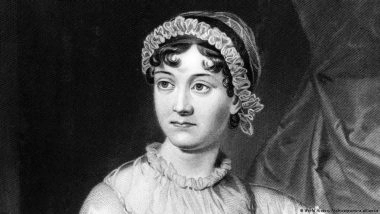
The English author's works fuel feminist debates, rom-coms and TikTok memes, proving her satire still lands across diverse cultural contexts more than two centuries on."It is a truth universally acknowledged that a single man in possession of a good fortune must be in want of a wife. "
This opening line from Jane Austen's "Pride and Prejudice" wasn't just a sly dig at the marriage market of early 19th-century England; it is perhaps one of the most recognizable lines in English literature.
Also Read | Business News | Ideas, Culture, Futures, Oakridge Bachupally Creates a Defining Moment in Education.
It hooks readers with Austen's trademark social satire, implying that a woman's best chance at security was to marry a rich man.
Today, her words provide fodder for memes and TikTok reels, while her six novels have been adapted countless times in countless ways, from the classic BBC miniseries to a zombie parody to a Bollywood spin, and have also inspired hit shows like Netflix's "Bridgerton."
Yet why do Austen's novels — set in Regency-era England and focusing on women from the middle and upper classes — still resonate today?
Satire and relatability
"Her humor still lands, which can't be said of her contemporaries," says Juliette Wells, professor of literary studies at Goucher College, in the US state of Maryland. Wells, who authored "Everybody's Jane: Austen in the Popular Imagination" (2011), attributes Austen's enduring appeal to her insight into human nature, with characters embodying traits that are still recognizable in diverse cultural contexts.
Born in 1775 in Steventon, Hampshire, Austen was the seventh of eight children. Raised in a lively, literary household, she began writing playful parodies in her teens and drafted her initial novels in her twenties.
Publishing anonymously at first, she released "Sense and Sensibility" (1811), "Pride and Prejudice" (1813), "Mansfield Park" (1814) and "Emma" (1815); "Northanger Abbey" and "Persuasion" were published posthumously in 1817, the same year she died at age 41.
Her novels explored family tensions, slow-burn romances, sisterhood, and the art of discerning good company from bad — themes that remain strikingly familiar.
Navigating a man's world — then and now
"Austen's heroines live in a classist, patriarchal society, with strict rules of conduct and a significant gender double standard. In some ways, our twenty-first-century world isn't so different," says Wells.
Austen gave her heroines agency through wit, intelligence and inner strength.
"We can all take courage from Austen's female protagonists like Elizabeth Bennet [in 'Pride and Prejudice'], who cares too much about her personal happiness to accept proposals from men she doesn't respect, or Anne Elliot in 'Persuasion,' who turns her back on her family's snobbery and values the admirable qualities of less-privileged people," Wells adds.
Subtly calling out the patriarchy
While Austen is sometimes described as a precursor to modern feminism, scholars note that her heroines' "happily ever afters" conform to patriarchal norms. Her female protagonists tend to end up in domestic bliss, even if the route there isn't smooth.
"Obviously, the marriage plot doesn't meet many contemporary standards of an empowered female character," says Shelley Galpin, lecturer in culture, media and creative industries at King's College London. "However, [Austen's] representation of young women who know their own minds and are not afraid to have a voice certainly resonates with modern notions of female empowerment."
Galpin cites Anne Elliot's observation in "Persuasion" that "the pen has been in their hands" — a sharp comment on male dominance.
"To me it shows Austen had some sense of gender inequality, and that she wasn't afraid to call this out … I would therefore say there are certainly feminist elements in her writing, even if it wouldn't be strictly accurate to call her a feminist."
Inventing the brooding hero
Alongside sharp-witted heroines, Austen also crafted iconic leading men, with Mr. Fitzwilliam Darcy, the main male protagonist in "Pride and Prejudice," as the most famous.
"Austen's men can definitely be read as a female fantasy of what a heterosexual man should be," Galpin explains.
The fantasy stretches from the time Austen penned the character to the present day: Darcy's transformation from aloof aristocrat to devoted partner has made him one of literature's most enduring romantic figures — and a pop culture sex symbol, thanks to onscreen portrayals by English actors Colin Firth and Matthew Macfadyen.
A singleton who dissected romance
For one who never married — though she reportedly had suitors and was briefly engaged — Jane Austen deftly dissected the timeless rituals of courtship between men and women.
"I definitely think her depictions of romance are universally relatable and appealing! The representation of the early stages of love feels so timeless, the emotions are so insightfully described that they resonate with audiences in different times and places," says Galpin.
Unsurprisingly, Austen’s stories made the perfect blueprint for modern slow-burn rom-coms. Hollywood's offerings include 1995's "Clueless" (based on "Emma") and the wildly successful "Bridget Jones's Diary" franchise (based on "Pride and Prejudice"). The latter even got a Bollywood makeover via "Bride and Prejudice" (2004), featuring star actor Aishwarya Rai.
The current Netflix hit series "Bridgerton" also pays homage to Austen's world of Regency-era courtship.
From Regency ballrooms to TikTok memes
Stills from Austen screen adaptations have become meme gold for Gen Z, remixed into viral content across TikTok, Instagram, and Twitter. Her protagonists' slow-burn romances are now captioned with modern anxieties about dating, social awkwardness or feminist self-assertion.
Scholars note the meme-worthiness of Austen's novels with her witty, repeatable lines, and archetypal characters, while in the post-#MeToo era, her critiques of gender roles resonate with newer audiences.
"Austen was very astute about how masculine power can lead to arrogance, so it's no surprise that her most powerful male characters lend themselves to critiques and take-downs today," explains Wells. "Her emphasis on men's capacity to change also resonates strongly with us."
Perhaps a truth that could universally be acknowledged is that Austen's legacy rests not only in literary renown but in her continuing relevance as a writer who still speaks to modern audiences.
Edited by: Cristina Burack
(The above story first appeared on LatestLY on Dec 15, 2025 02:20 PM IST. For more news and updates on politics, world, sports, entertainment and lifestyle, log on to our website latestly.com).
 Share Now
 Google Trends



 Live Bot