International Asteroid Day 2025 Facts: Interesting Things About Space Rocks That Every Astronomy Enthusiasts Must Know
Founded by astrophysicist Dr. Brian May (also the guitarist of Queen), filmmaker Grig Richters, and a team of scientists and astronauts, Asteroid Day was officially endorsed by the United Nations in 2016. Events worldwide include educational programs, space agency broadcasts, documentaries, and expert discussions.

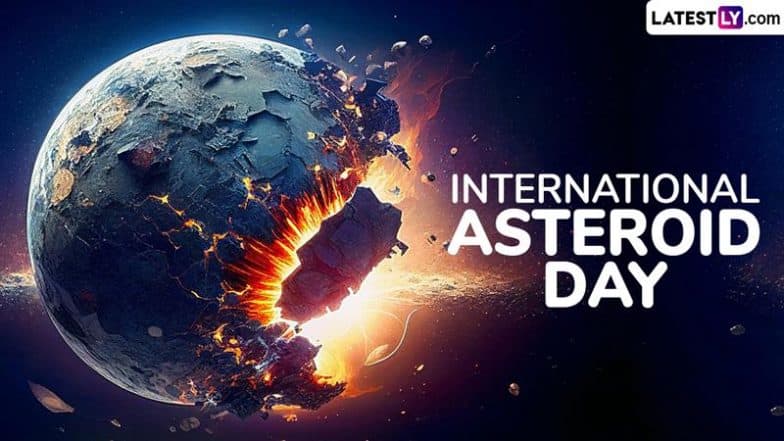
International Asteroid Day is observed every year on June 30 to raise global awareness about the potential threats and scientific value of asteroids. The date commemorates the Tunguska event of 1908, when a massive asteroid exploded over Siberia, flattening over 2,000 square kilometres of forest. This day encourages efforts to detect, track, and understand near-Earth objects (NEOs) through global cooperation among space agencies, scientists, and educators. It also highlights the importance of asteroid research for planetary defence and our understanding of the solar system's formation. Asteroid 2024 YR4 To Collide With Earth in 2032? NASA Gives Good News on 'City Killer' Asteroid.
Founded by astrophysicist Dr. Brian May (also the guitarist of Queen), filmmaker Grig Richters, and a team of scientists and astronauts, Asteroid Day was officially endorsed by the United Nations in 2016. Events worldwide include educational programs, space agency broadcasts, documentaries, and expert discussions. By promoting early detection technologies and research funding, International Asteroid Day plays a crucial role in preventing potential future disasters and inspiring curiosity about space among younger generations. As you observe International Asteroid Day 2025, here are fun facts about the space rocks you must know. Asteroid Y4: City-Devastating Space Rock, Nearly Size of a Football Field, Causes Major Concern Among Global Space Agencies.
Asteroids Are Leftovers From the Solar System’s Formation
These rocky bodies are remnants that never coalesced into planets, offering clues about the early solar system.
There’s an Asteroid Belt Between Mars and Jupiter
It contains millions of asteroids, and some of the largest ones, like Ceres and Vesta are big enough to be considered dwarf planets or proto-planets.
Some Asteroids Have Moons
Yes, certain large asteroids, like Ida, have tiny moons orbiting them. These are called binary or even triple asteroid systems.
NASA Has Landed On and Returned Samples From Asteroids
Missions like Hayabusa2 (JAXA) and OSIRIS-REx (NASA) have landed on asteroids and brought material back to Earth for study.
Asteroids Could Be the Future of Mining
Many asteroids are rich in precious metals like platinum and gold, making them a potential target for space mining in the future.
International Asteroid Day reminds us of the delicate balance between cosmic wonders and potential threats from space. By increasing awareness, promoting scientific research, and encouraging global collaboration, this day plays a vital role in protecting our planet and expanding our understanding of the universe. As we look to the future, asteroids not only pose challenges but also offer exciting opportunities for discovery and innovation beyond Earth.
(The above story first appeared on LatestLY on Jun 30, 2025 07:11 AM IST. For more news and updates on politics, world, sports, entertainment and lifestyle, log on to our website latestly.com).