What Is Universal Kidney? All About Donor Kidney Compatible With Any Blood Type Developed by Canadian and Chinese Researchers
Scientists from Canada and China have developed a Universal Kidney, a donor organ compatible with any blood type, potentially transforming kidney transplants. Using specialized enzymes, a type A kidney was converted to type O and successfully tested in a brain-dead recipient. This breakthrough could reduce waiting times, save lives, and expand access to kidneys worldwide. Let's know all about the Universal Kidney.

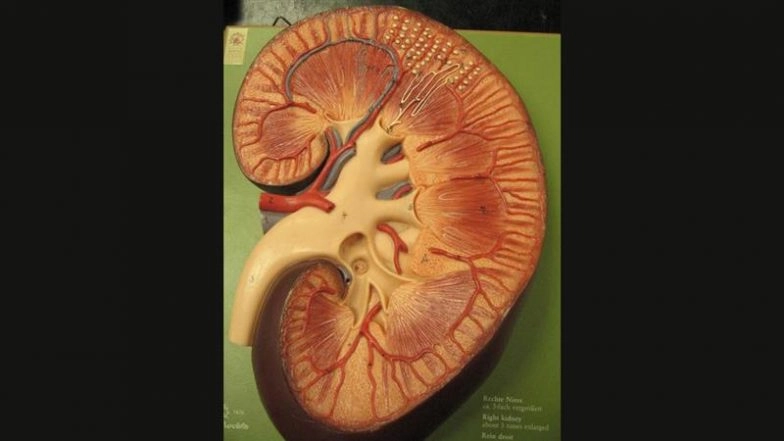
Mumbai, October 20: Whenever an individual requires a kidney transplant, they have to wait for a compatible donor, often based on blood type and other medical factors, which can take years. This lengthy wait can be life-threatening, especially for patients with type O blood, who form the majority of transplant waitlists. What if instead of waiting for a perfectly matched donor, a "universal kidney" could be made available to any patient? Researchers from Canada and China are now closer than ever to this possibility. As per research published in Nature Biomedical Engineering, scientists have successfully developed a universal kidney that could potentially be accepted by patients of all blood types.
This breakthrough raises hopes of drastically reducing transplant waiting times and saving lives. The innovative method involves converting donor kidneys into a form compatible with any recipient using specialised enzymes, effectively removing the blood-type markers that trigger immune rejection. The test organ functioned well in a brain-dead recipient for several days, demonstrating the potential of this approach. Such a development could redefine organ transplantation and patient care in the years to come. So, what is Universal Kidney? Let’s know all about the breakthrough, how it works. Gwada Negative: New Blood Group Discovered by Scientists in French Woman From Guadeloupe, Know All About the World’s 48th Blood Group System.
What is Universal Kidney?
A universal kidney is a donor organ that can be transplanted into any patient, regardless of their blood type, eliminating the need for exact blood-type matching. This breakthrough aims to address the critical shortage of compatible kidneys and reduce long waiting times for transplantation. By converting the donor kidney into a blood-type–neutral organ, scientists hope to make kidney transplants more widely accessible and safer, potentially saving thousands of lives each year. What Is Artificial Blood? Know All About the Universally Compatible Lab-Made Blood Substitute Developed by Scientists in Japan.
How Universal Kidney Works
The process involves using enzymes that act like molecular scissors to strip away specific sugar molecules, called antigens, from the surface of the donor kidney. These antigens normally identify the organ’s blood type, and their presence triggers the recipient’s immune system to attack incompatible kidneys. By removing these markers, the kidney effectively becomes type O, which is universally compatible with all blood types. The procedure is performed during hypothermic perfusion, circulating the enzyme solution through the kidney while it is outside the body.
Once the kidney is converted, it can be transplanted into a recipient without the need for preconditioning or extensive immunosuppressive therapy. In early tests, a type A kidney converted to type O was transplanted into a brain-dead recipient, where it functioned for several days with minimal immune response. While antigens began to reappear after three days, signs of immune tolerance were observed, suggesting the potential for longer-term acceptance.
Published in Nature Biomedical Engineering, this research highlights a donor-centric approach to organ transplantation, prioritising the modification of the kidney rather than the recipient. The universal kidney could greatly improve fairness and access in kidney allocation, reducing deaths and waiting times for patients, especially those with type O blood. Future clinical trials and further refinements of the enzyme technology may make this life-saving innovation widely available.
(The above story first appeared on LatestLY on Oct 20, 2025 01:53 PM IST. For more news and updates on politics, world, sports, entertainment and lifestyle, log on to our website latestly.com).