How Detrimental Is the Fashion Industry to the Environment? Increased Clothing Production Leads to Higher Emissions and Contributes to Methane Pollution
Textile Exchange has released its annual Materials Market Report alongside its Materials Benchmark Insights and Trends 2025, as well as its Climate+ Dashboard. These comprehensive reports reveal a troubling truth: global fiber production has soared to a staggering 132 million tons in 2024, doubling since 2000. Despite nearly a decade of climate pledges, the fashion industry is on a path that strays further from the crucial 1.5°C climate goal aimed at keeping global warming within safe limits.

While some may claim progress, the numbers tell a different story. A record 423 brands and retailers reported data to Textile Exchange this year, and 67% of reported raw materials were sourced through recognised sustainability standards, up from 58% in 2023. Virgin fossil-based polyester consumption has dropped by 12%, and cotton certification has risen to 34%, with an increase in man-made cellulose fibres from certified feedstocks. However, polyester continues to dominate, comprising 59% of total fibre production, with 88% of that still coming from fossil fuels. Even though recycled polyester volumes have grown, their market share has shrunk to 12% as the rise in virgin production outstrips recycling efforts, which remain almost negligible at under 1%. Upcoming Trends From NYFW for the Final Quarter of the Year.
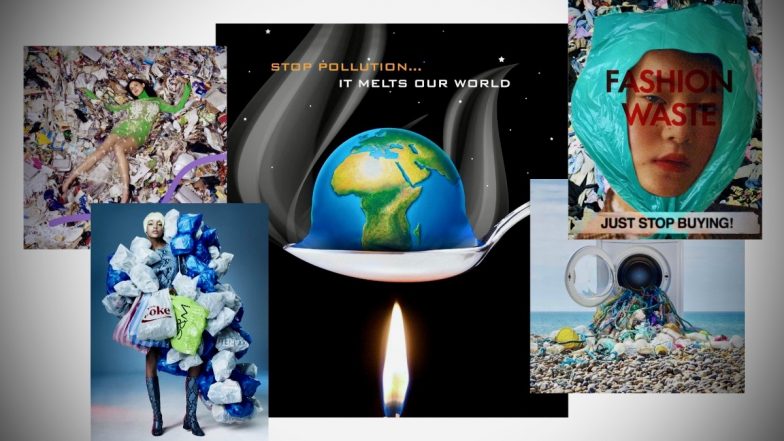
This report starkly highlights a major contradiction within the fashion industry: brands may be sourcing more “preferred” materials, but these minor gains are being completely overshadowed by the relentless escalation in overall production. As long as the industry continues its unsustainable practices—especially in fossil-fuel synthetics—emissions will keep climbing. Sourcing improvements are important, but they are insufficient on their own to mitigate the impact of escalating production. Four Colour Combinations for a Stylish and Coordinated Look To Watch This Autumn.
Additionally, a report from Collective Fashion Justice, developed with experts from Cornell and NYU, exposes a critical oversight in the industry. While fashion has predominantly concentrated on CO₂ emissions, it has failed to address methane, a greenhouse gas that traps significantly more heat in the short term. Rapidly reducing methane could serve as an essential “emergency brake” on climate change.
The findings are alarming: the fashion sector produces 8.3 million tons of methane annually, equivalent to an astonishing 712 million tons of CO₂e over the next two decades if no action is taken. Despite constituting less than 4% of total material use, animal-derived fibres—leather, wool, and cashmere—account for 75% of the industry's methane footprint, with leather alone representing more than half of that contribution. While synthetic fibres such as polyester and nylon do have an impact through fossil fuel extraction, their contribution pales in comparison.
The report warns that without effective methane mitigation, the fashion industry could exceed the Paris Agreement’s 1.5°C target by 50%. Collective Fashion Justice offers clear recommendations to address this issue.
1. Reduce and eventually eliminate virgin wool, leather, and cashmere. Where feasible, brands should rely on recycled versions or true by-products instead of exacerbating demand for new materials.
2. Recognise polyester, nylon, and polyurethane as long-term unsustainable. These materials are inherently tied to petroleum and pose significant end-of-life challenges, including pollution from microplastics.
3. Invest in next-generation, plastic-free biomaterials. Mills and processing facilities must be powered by renewable energy, and support for recycled inputs must be prioritised across the board.
The bottom line is clear: methane needs to be treated as a distinct climate target rather than concealed within CO₂e totals. It is crucial for the fashion industry to commit to transitioning towards lower-impact, non-extractive materials.
Despite the urgency, dissent surrounds the report. Wool and leather advocates argue that the methodology unjustly attributes livestock emissions to the fashion industry, as hides largely stem from the meat sector. Critics highlight that millions of hides are wasted each year and that the absence of fashion demand could exacerbate this issue. Moreover, while the fashion sector’s methane emissions are significant, they represent only about 1.4% of global methane emissions, raising concerns about the proportionality of the focus.
Debate persists around potential solutions. While the call to phase out virgin animal fibers is made, opponents caution that this could push the industry toward synthetic alternatives tied to fossil fuels, particularly since next-gen biomaterials have yet to scale adequately. Furthermore, advocates for regenerative farming maintain that improved grazing and soil management can reduce emissions, although CFJ acknowledges that while such practices can sequester some carbon, their benefits are too limited and transient to counterbalance the immediate and powerful warming effects of methane.
For brands, the challenge ahead is as practical as it is political. Immediate and decisive action is imperative to ensure a sustainable future for fashion.
(The above story first appeared on LatestLY on Sep 22, 2025 03:31 PM IST. For more news and updates on politics, world, sports, entertainment and lifestyle, log on to our website latestly.com).