Mount Taftan Volcano Awakens After 700,000 Years of Dormancy As Scientists Detect Ground Uplift and Possible Magma Movement Beneath Iran’s Long-Silent Peak
Mount Taftan in southeastern Iran, dormant for over 700,000 years, is showing signs of renewed activity. Satellite data reveal a 9 cm ground uplift between July 2023 and May 2024, suggesting magma movement beneath the volcano. Scientists warn it could be a potential hazard, though eruption isn’t certain.

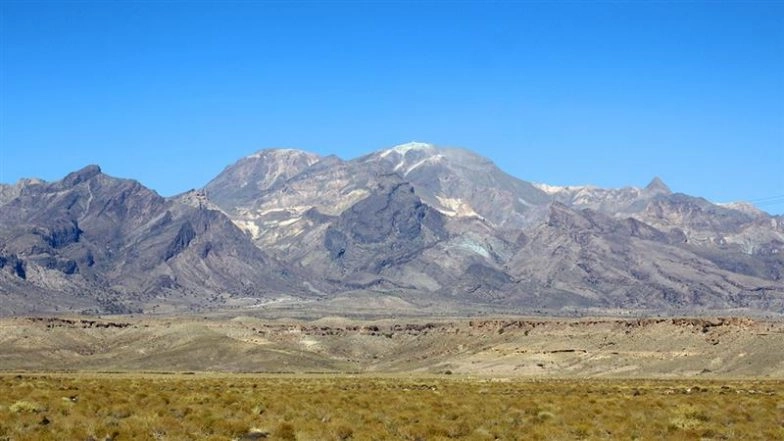
Tehran, October 25: A volcano believed to be dormant for over 700,000 years may be coming back to life. Mount Taftan, a towering stratovolcano in southeastern Iran near the Pakistan border, is showing clear signs of renewed activity, according to a new study published in Geophysical Research Letters. Satellite data reveals the volcano’s ground surface has risen by around 9 centimeters (3.5 inches) between July 2023 and May 2024 — a signal of subsurface pressure buildup that could mark the early stages of volcanic unrest.
For decades, Taftan was thought to be extinct, but reports last year indicated otherwise. National media outlets noted a surge in sulfuric gas emissions from the volcano’s fumaroles, with plumes of smoke and ash visible up to 50 kilometers away in the city of Khash. Now, fresh satellite observations confirm that Mount Taftan is no longer sleeping. Volcano Erupts in Hawaii: Kilauea Volcano Spews Lava 100 Feet High Into Sky, 31st Outburst Since December 2024; Video Surfaces.
Ground Uplift Confirms Renewed Volcanic Activity
Researchers from the European Space Agency’s Sentinel-1 mission used advanced radar imaging, known as Interferometric Synthetic Aperture Radar (InSAR), to measure small shifts in the ground surface. Their analysis found that the volcano’s southeastern summit expanded by nearly 9 centimeters within 10 months — a stark contrast to the mere millimeter-scale movements seen between 2015 and 2020. This clear pattern of uplift signals that internal pressure beneath the volcano is increasing, suggesting active geological processes. Volcano Erupts in Russia: Krasheninnikov Volcano in Kamchatka Spews Ash 3 to 4 km High Into Sky After Erupting for 1st Time in 600 Years (See Pics and Videos).
What’s Triggering the Change?
Interestingly, scientists found no evidence of external triggers such as rainfall or nearby seismic events. Instead, they propose that gradual internal processes — either the buildup of volcanic gases or small, undetected magma movements — are causing the swelling. The source of this uplift lies roughly 490 to 630 meters beneath the surface.
Experts caution that while the deformation is significant, it doesn’t confirm an imminent eruption. Similar uplifts, such as the 6-centimeter rise at Italy’s La Fossa Caldera, did not result in eruptions. However, the persistent pressure signals at Mount Taftan indicate it remains a potentially hazardous area, warranting continuous satellite and ground-based monitoring.
(The above story first appeared on LatestLY on Oct 25, 2025 03:32 PM IST. For more news and updates on politics, world, sports, entertainment and lifestyle, log on to our website latestly.com).